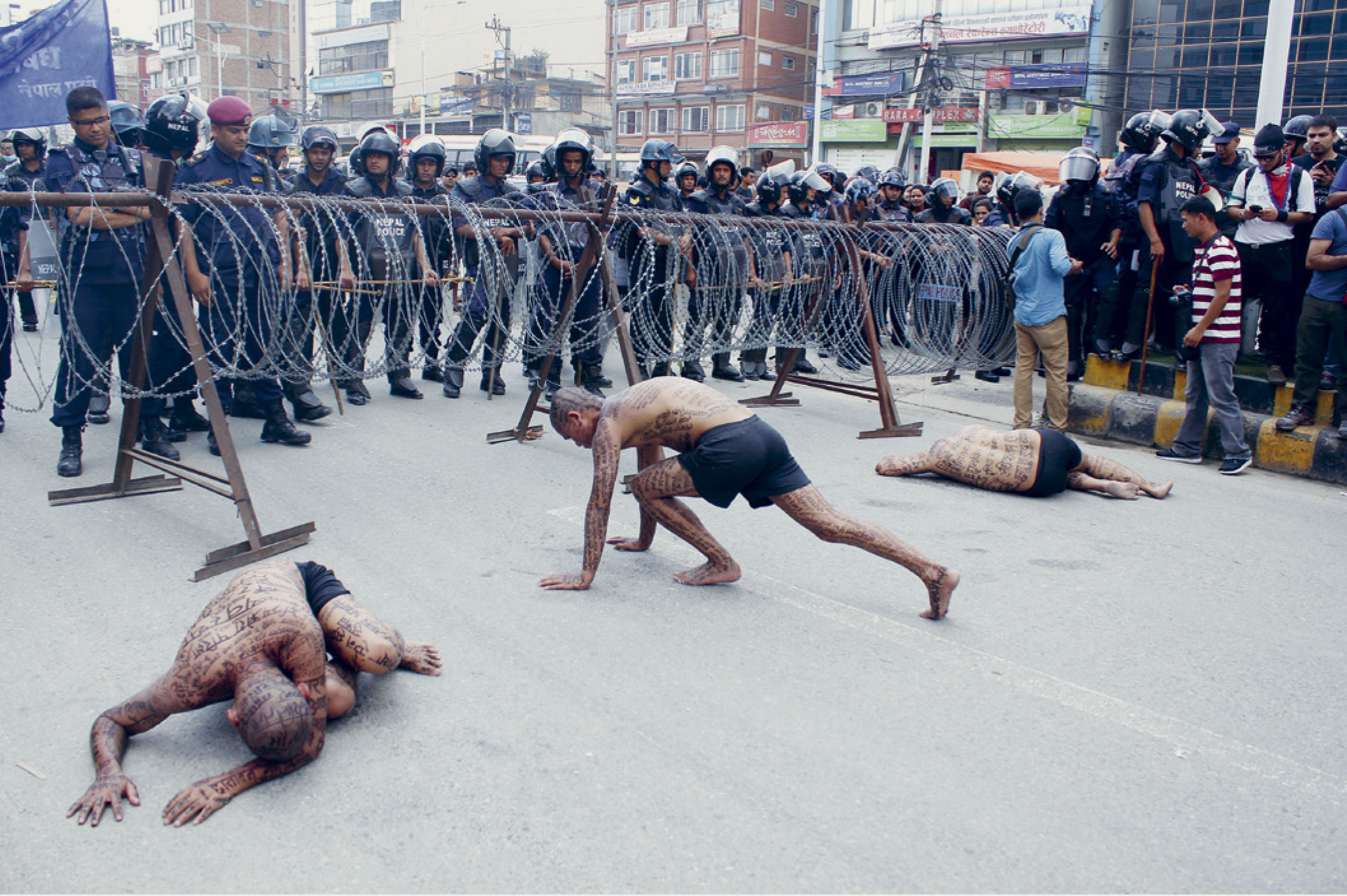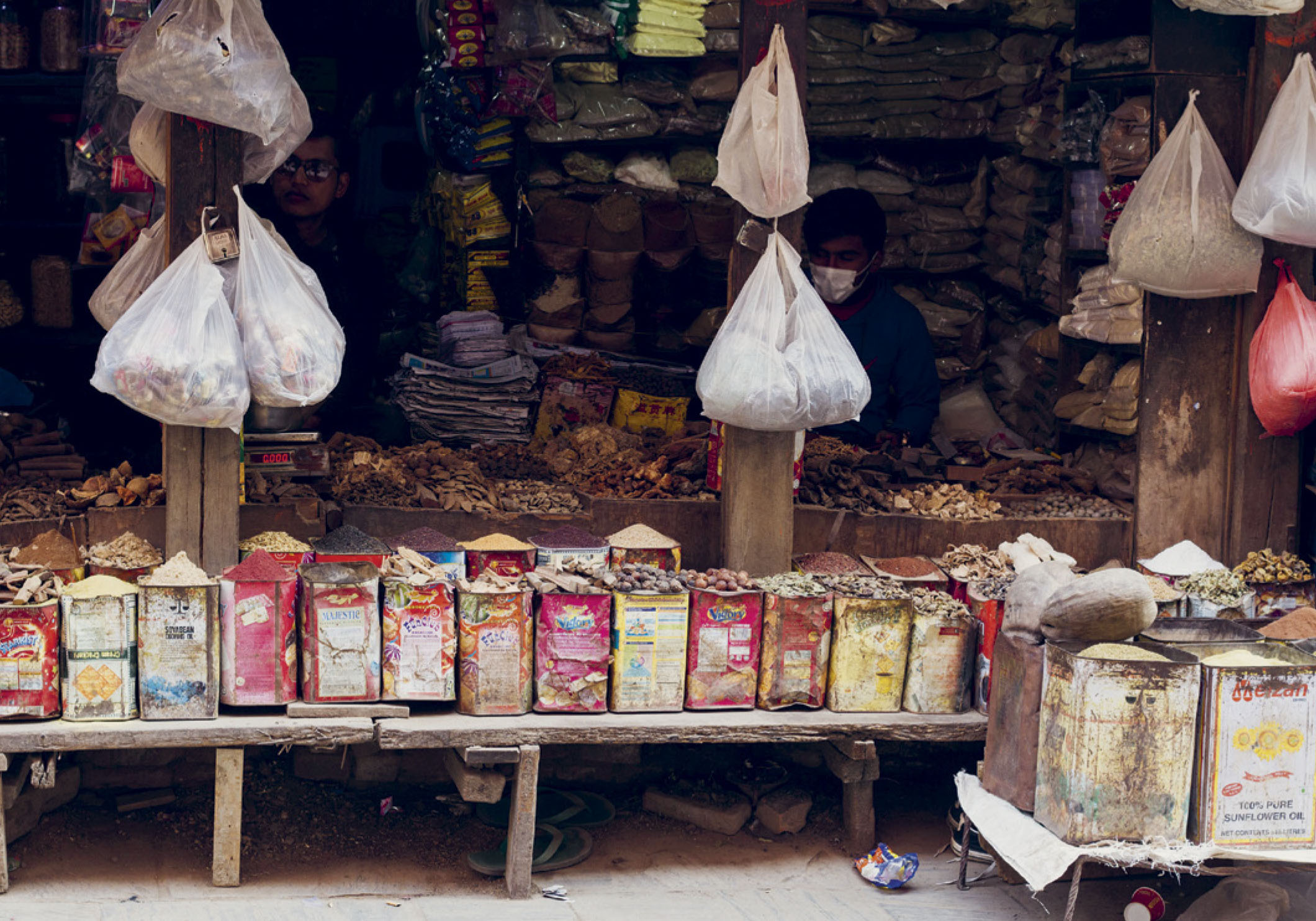
NIRIN
represents something like a spider’s web that connects people and ideas. It is the border through which things stay attached. It is not about a hierarchy of ideas, but rather
about being together.There is no centre or periphery, it’s like being in a digital cloud where everything is together.

Rosana Paulino
1. Front Cover
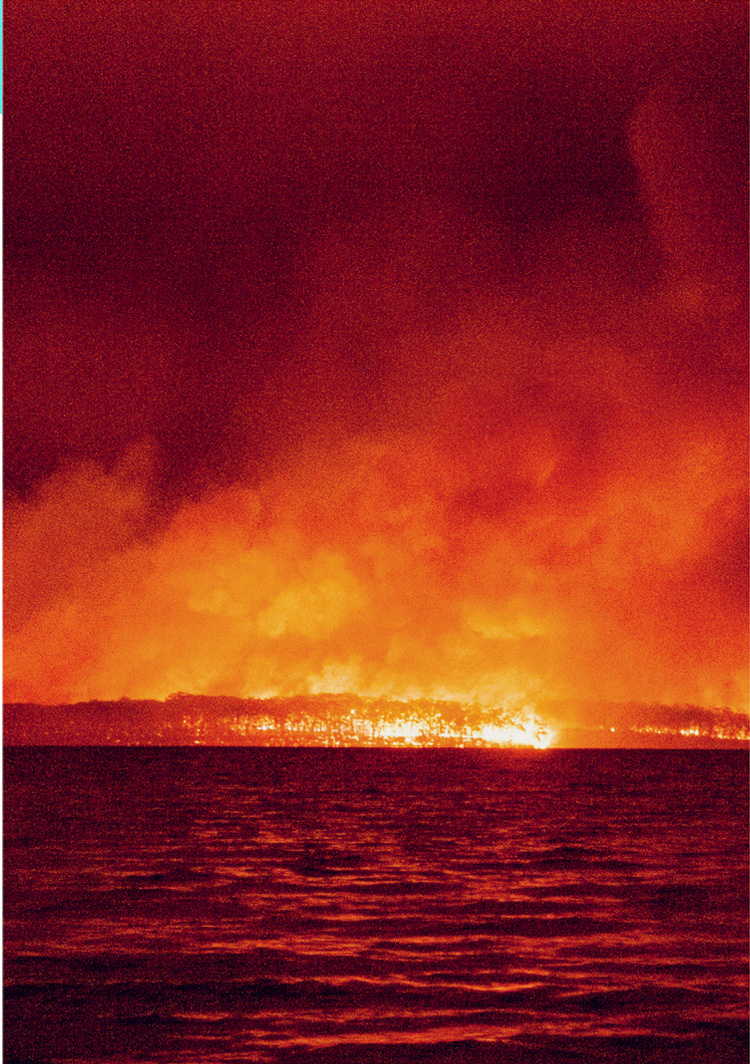
Geoff Kleem, Swan Lake on Fire, 2019, digital photograph.
1. Front Cover

In Sudan, we say:‘Dying within a group of like minded people is a feast.’ I feel I am in within my group.

Ahmed Umar
1. Front Cover

If we are to compare Manila,the capital (and centre) of the Philippines, to a toilet: the centreis where the drain is and the closer you are to it the more shit you encounter and the bigger the pull of the drain to suck you in with it all.That is why I prefer to live on the outskirts, the periphery. You can still cling to the Edge in order not to get flushed into the centre.

Denilson Baniwa
1. Front Cover

We Indigenous peoples search for the recognition and affirmation of the edges of an effervescent world that needs to know itself better through reflection. The original peoples are the only ones that resist its expansion,that are not forgotten in an idyllic past but inserted in the contemporary world and taking advantage of the strategies of struggle that are placed at its reach.The community must be reminded that the Indigenous population is and has been present throughout the history of society’s formation and not its Edge.

Manuel Ocampo
1. Front Cover
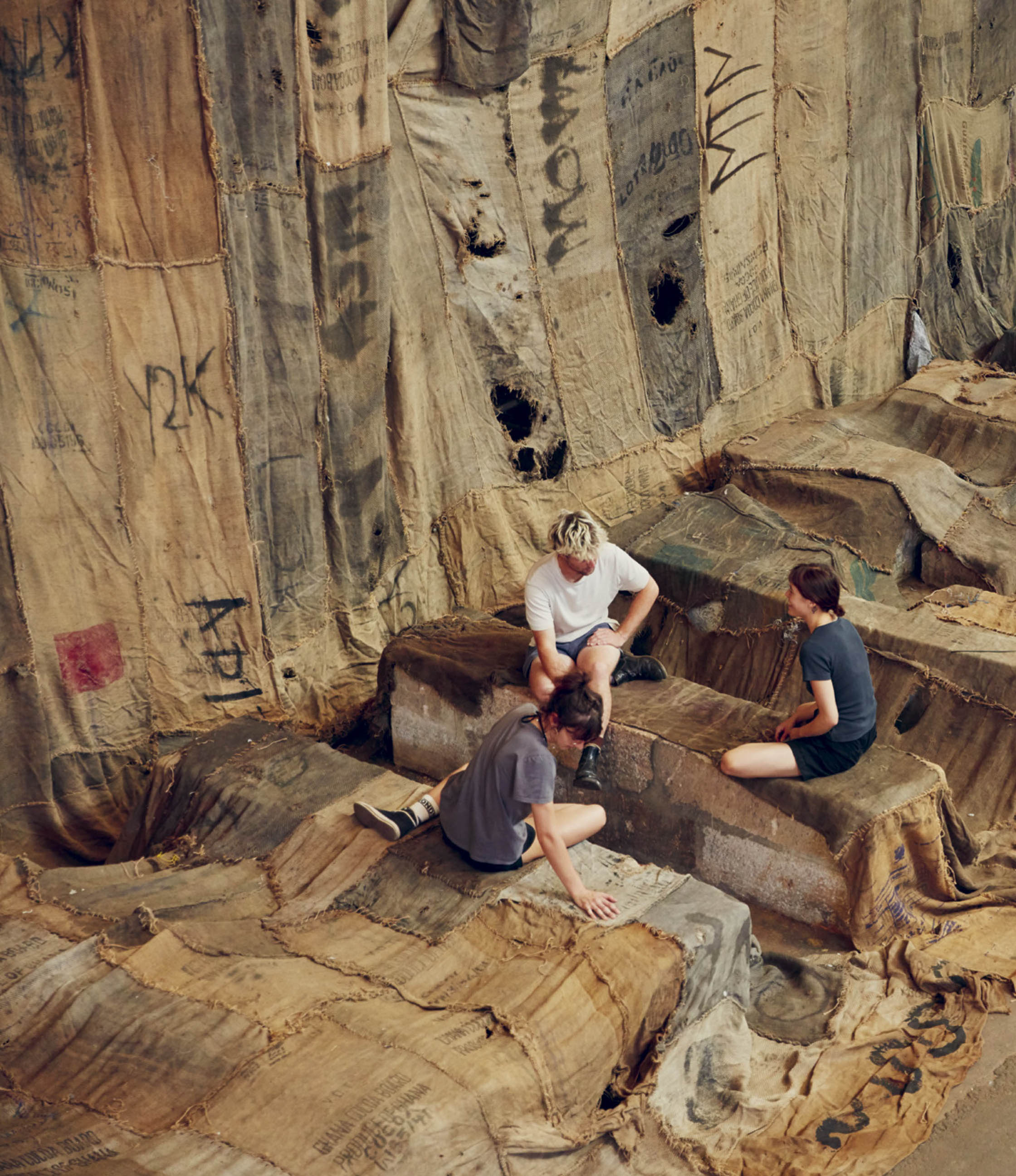
↑ Ibrahim Mahama, No Friend but the Mountains 2012–2020, 2020, charcoal jute sacks, sacks, metal tags and scrap metaltarpaulin, dimensions variable. Installation view, detail (2020) for the 22nd Biennale of Sydney, Cockatoo Island. Photograph: Zan 16 Wimberley. Courtesy the artist; White Cube, London and Hong Kong; and Apalazzo Gallery, Brescia.
1. Front Cover
1. Front Cover
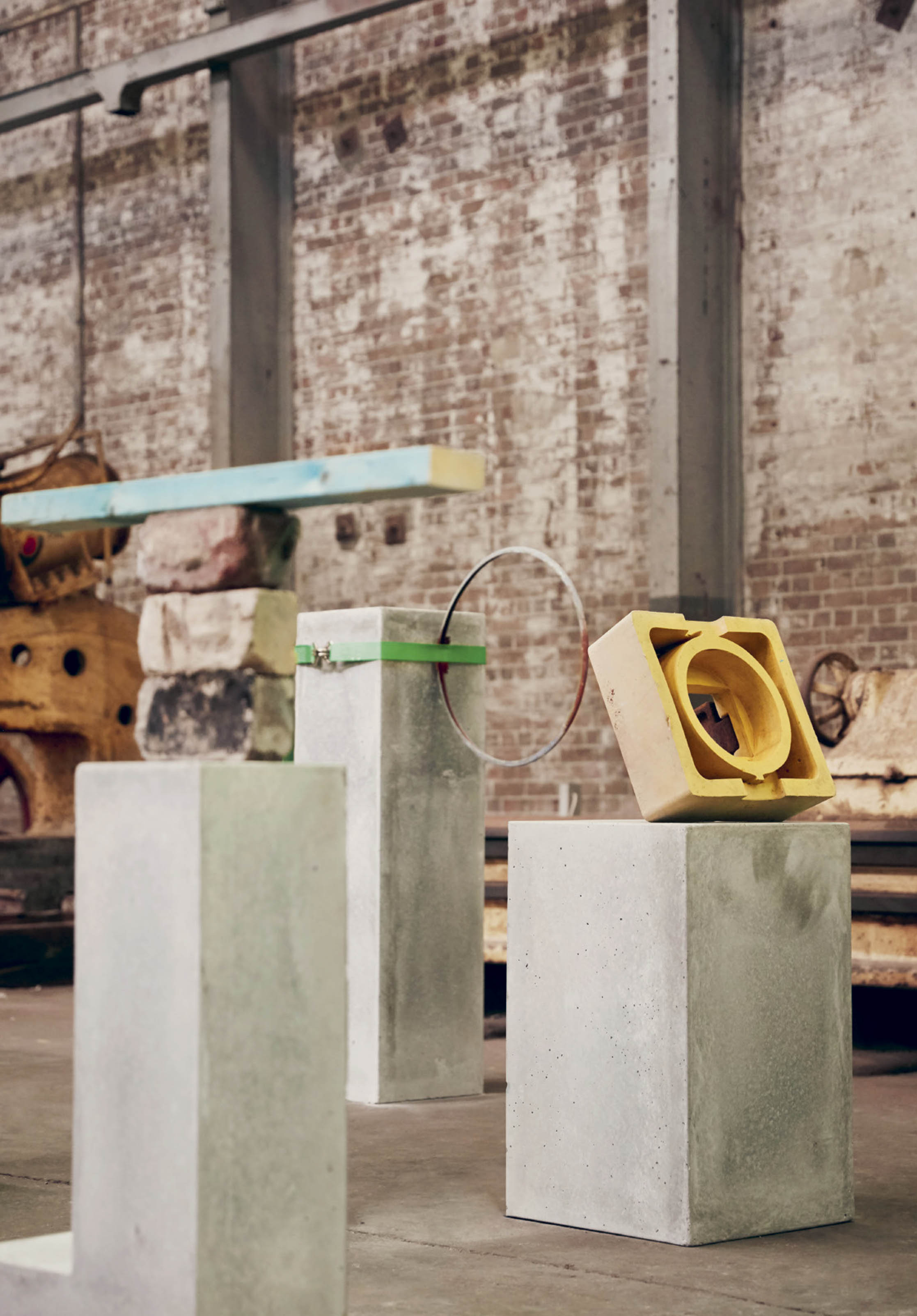
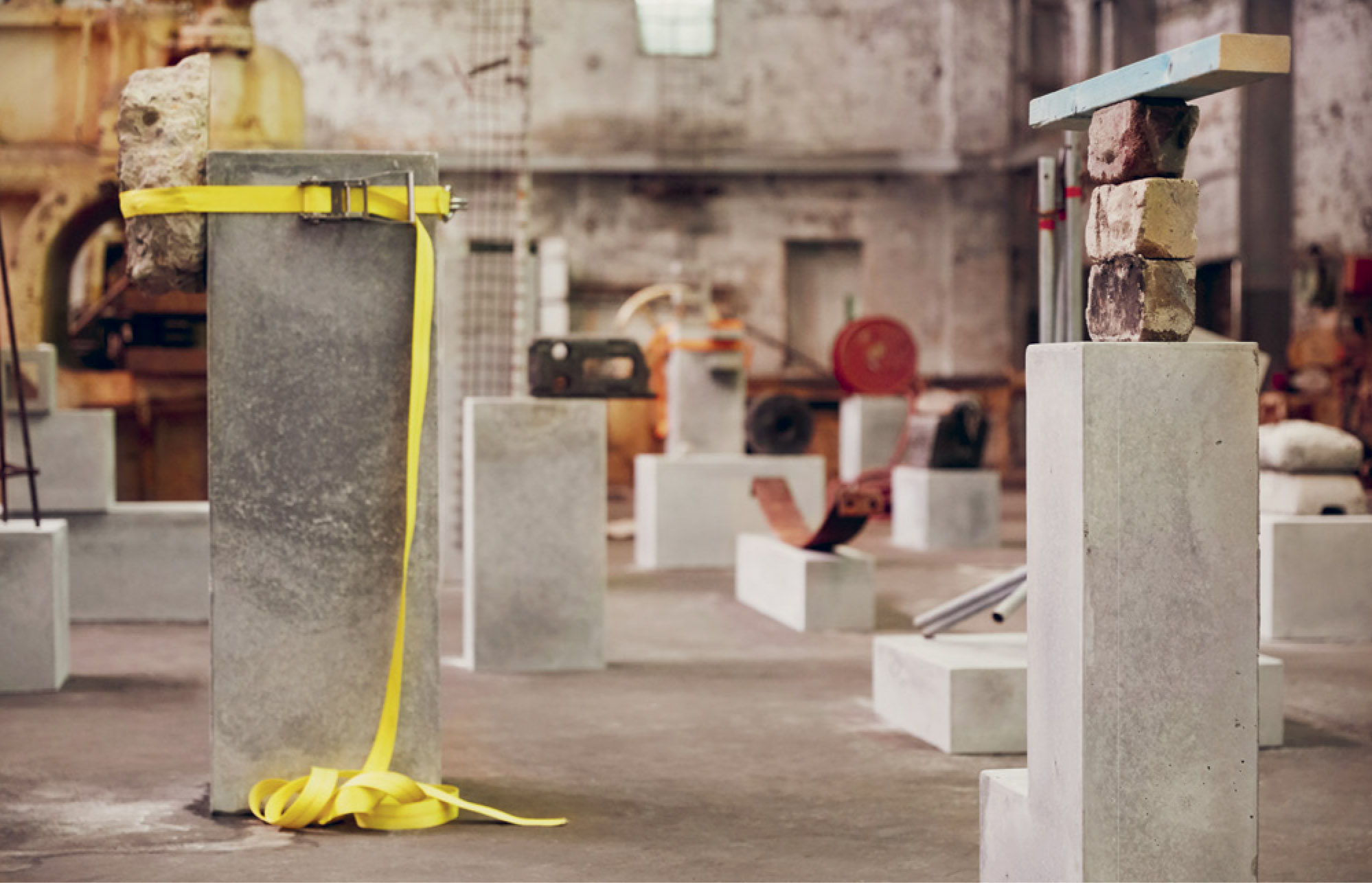
↖ ↑ Jose Dávila, The Act of Perseverance, 2020, site specific mixed media installation with found materials from CockatooIsland, dimensions variable. Installation progress view, detail (2020) for the 22nd Biennale of Sydney, Cockatoo Island. Photograph: ZanWimberley. Courtesy the artist and König gallery
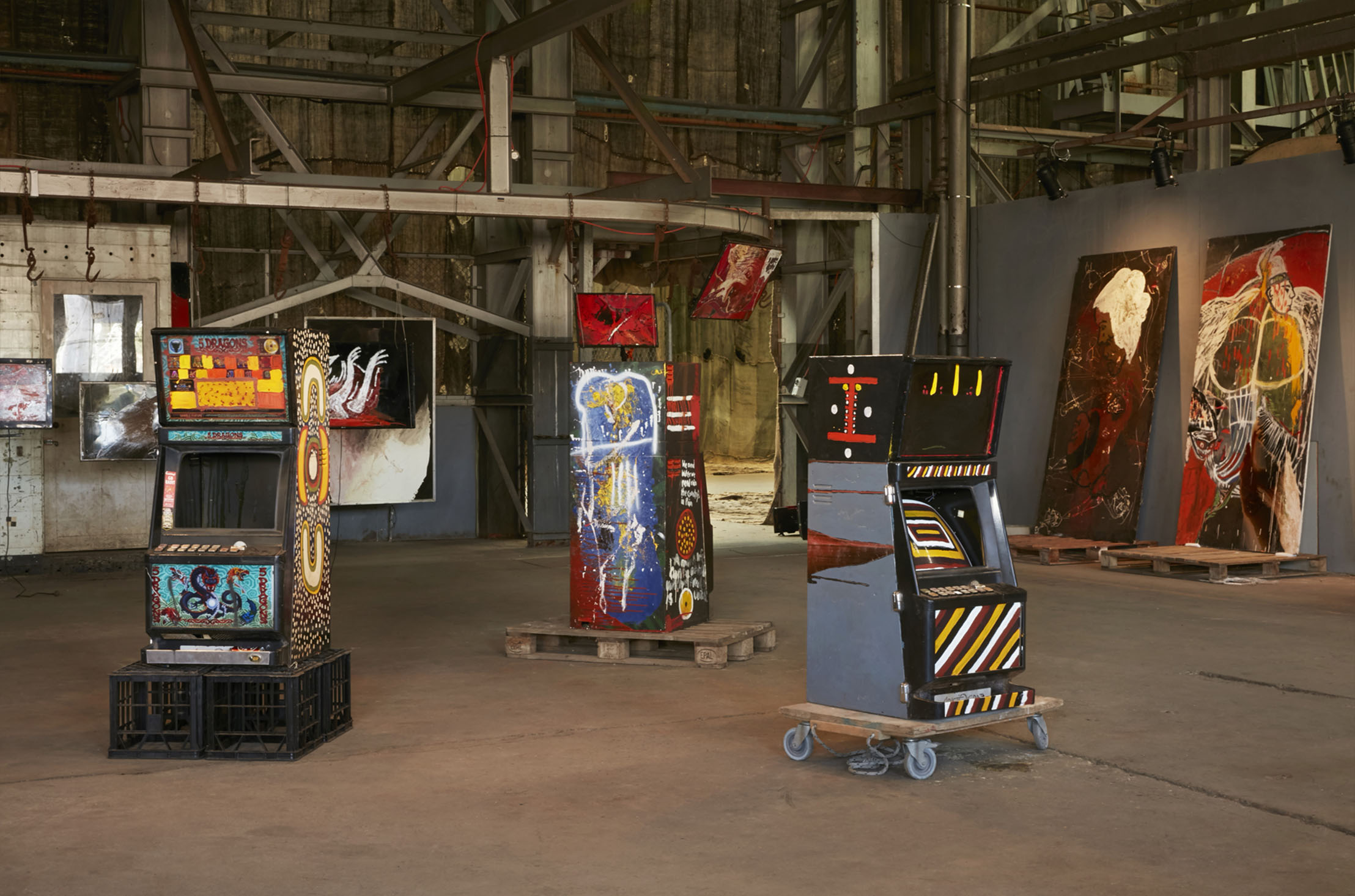
↗ Eric Bridgeman and Haus Yuriyal, SUNNA (Middle Ground), 2020, multimediainstallation, round house, picture house, painting, billum weaving, photography, video, audio, dimensions variable. Installation progressview (2020) for the 22nd Biennale of Sydney, Cockatoo Island. Photograph: Zan Wimberley. Courtesy the artist; Milani Gallery, Brisbane; 20 and Gallerysmith, Melbourne.
1. Front Cover
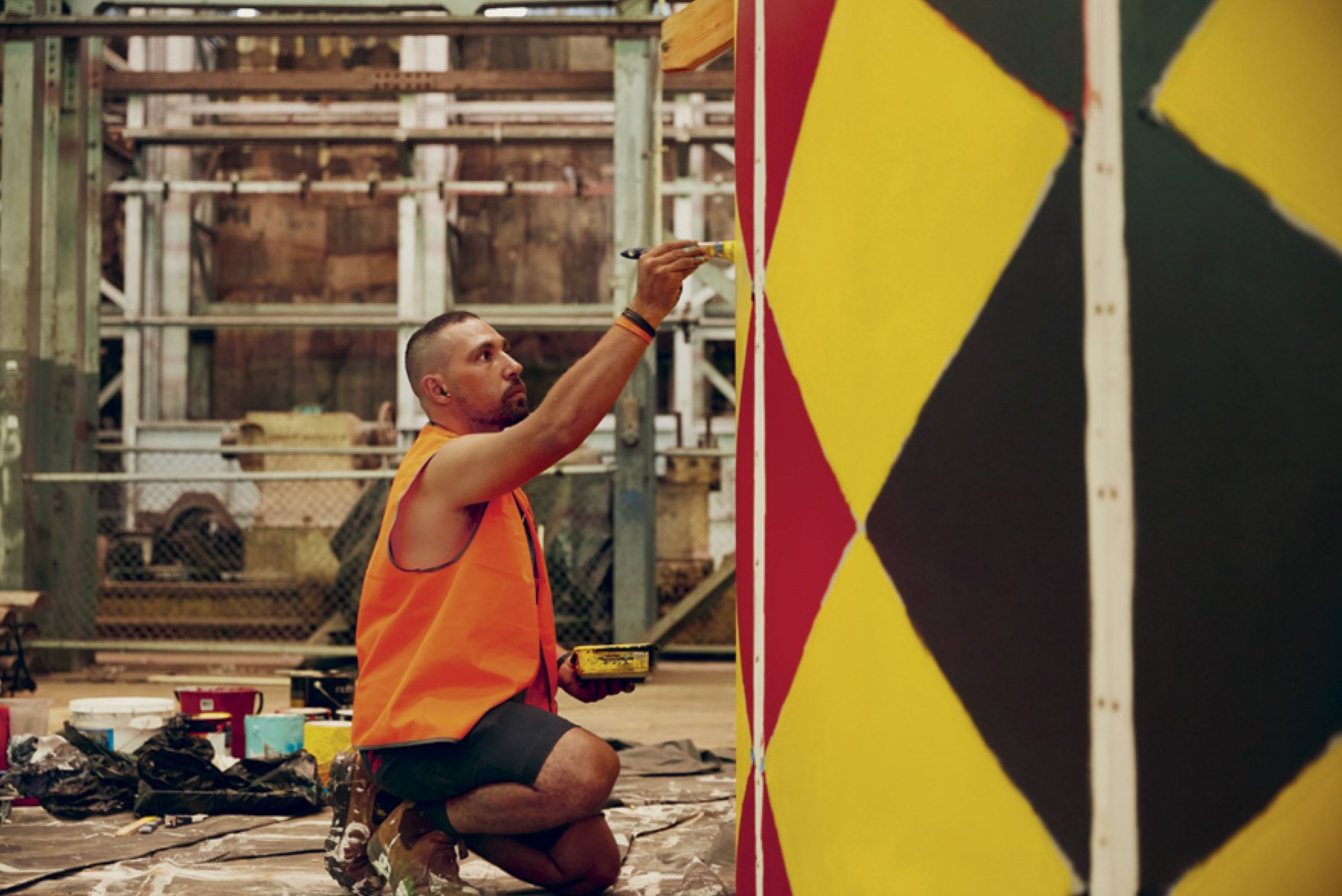
Eric Bridgeman installing SUNNA (Middle Ground), Eric Bridgeman and Haus Yuriyal, 2020, multimedia installation, roundhouse, picture house, painting, billum weaving, photography, video, audio, dimensions variable. Installation progress view (2020) for the22nd Biennale of Sydney, Cockatoo Island. Photograph: Zan Wimberley. Courtesy the artist; Milani Gallery, Brisbane; and Gallerysmith,Melbourne.
1. Front Cover
Tennant Creek Brio. Installation progress view (2020) for the 22nd Biennale of Sydney, Cockatoo Island. Photograph: Zan Wimberley. 24 Courtesy the artists and Nyinkka Nyunyu Art and Culture Centre.
1. Front Cover
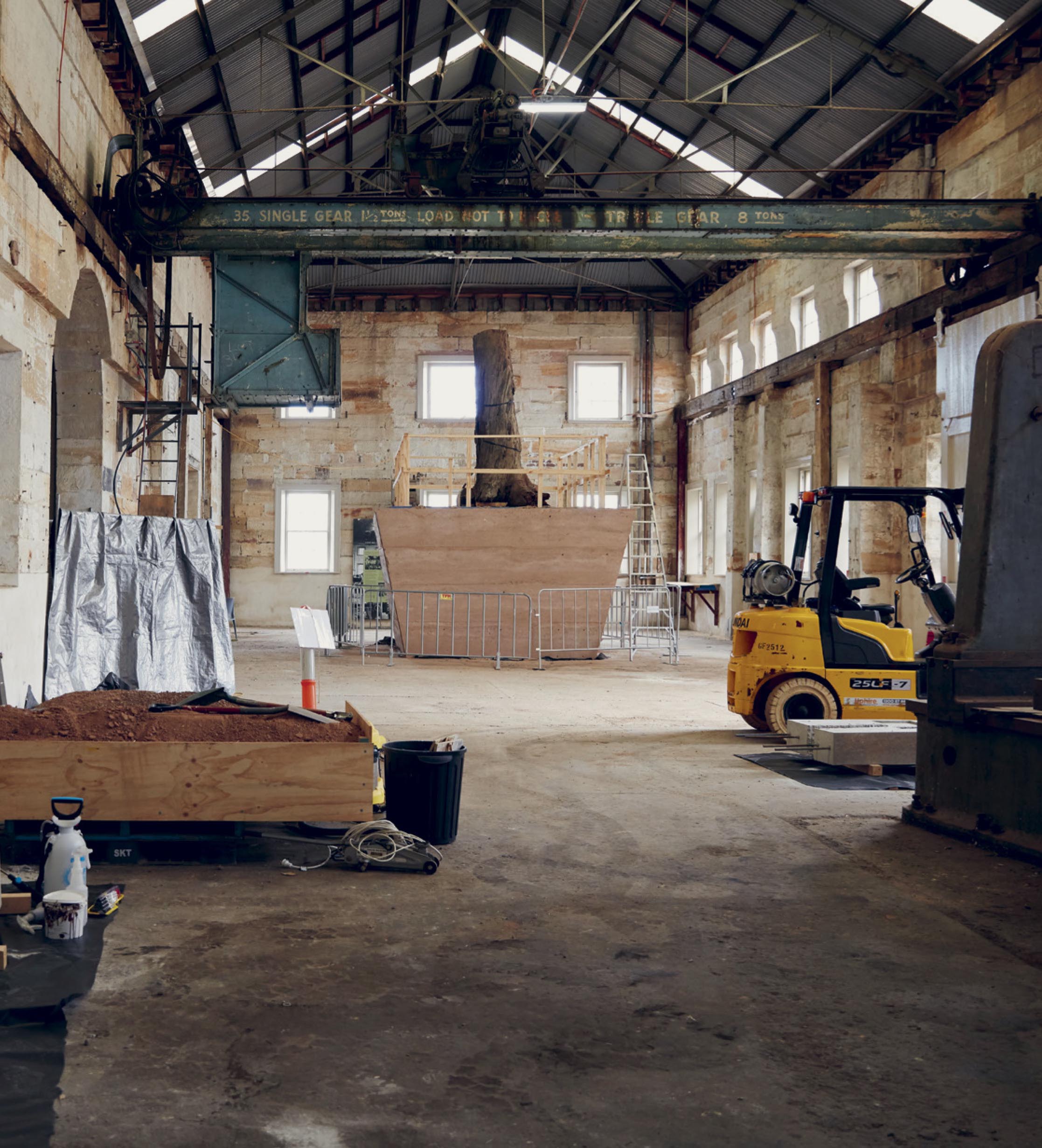
↑ Vajiko Chachkhiani, Army without thegeneral, 2020, tree trunk, stone, concrete, ceramics, soil, tree branches, dead bushes, tombstone plates, dimensions variable. Installationprogress view (2020) for the 22nd Biennale of Sydney, Cockatoo Island. Photograph: Zan Wimberley. Courtesy the artist; Daniel Marzona, 26 Berlin; and SCAI The Bathhouse, Tokyo.
1. Front Cover
1. Front Cover
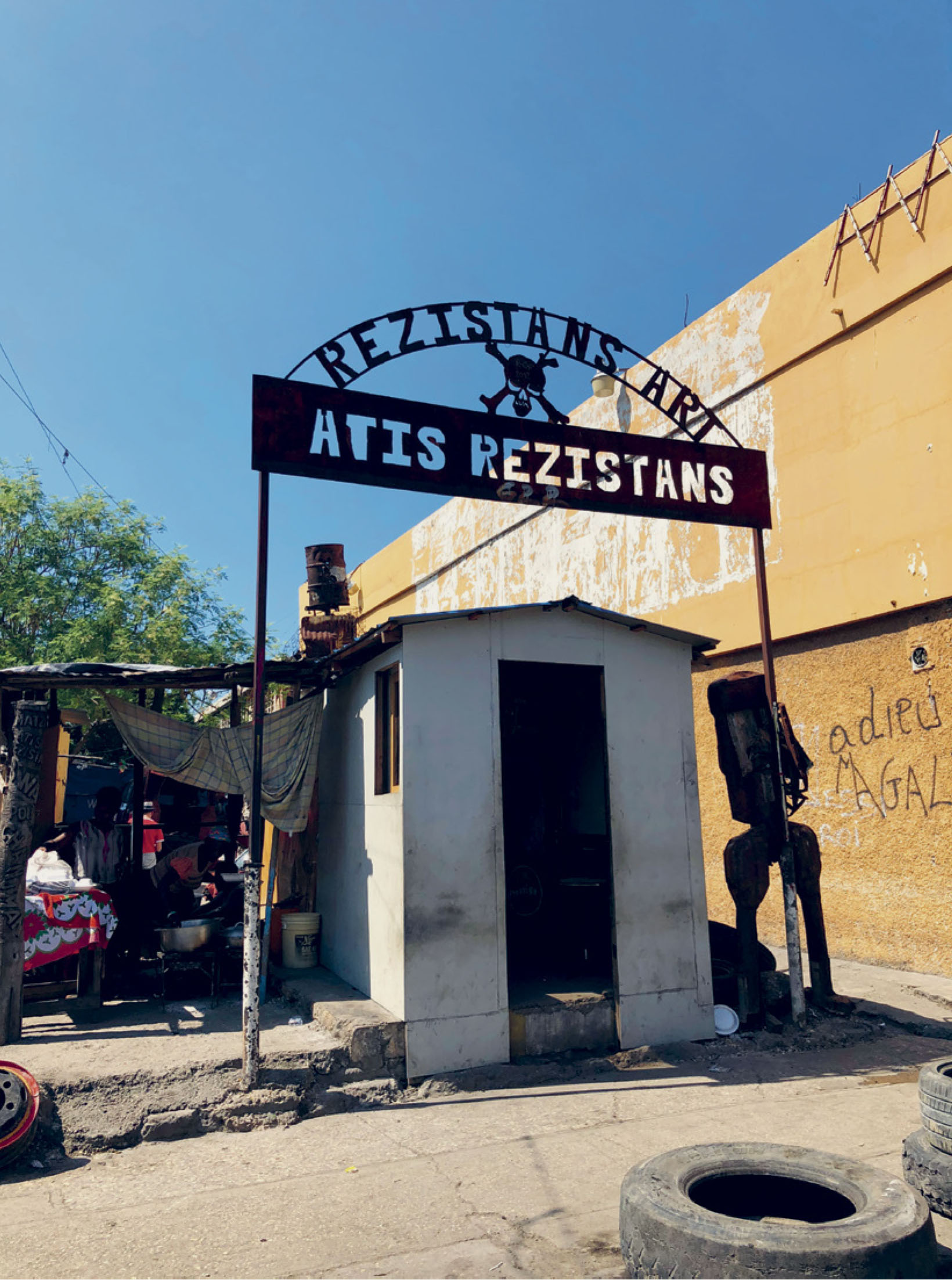
↖ Andre Eugene making Lavi & Lanmò (Life and Death), 2020, mixed media installation of recycled wood, metal,plastic, dimensions variable. Installation progress view (2020) for the 22nd Biennale of Sydney. Photograph: Zan Wimberley. Courtesy theartist. ← Colectivo Ayllu installing don’t blame us for what happened, 2019–20, mixed media installation with print walls, videoprojections, audio and altar, dimensions variable. Installation progress view (2020) for the 22nd Biennale of Sydney, Artspace. Photograph:Zan Wimberley. Courtesy the artists. ↑ Anders Sunna installing SOAÐA, 2020, mixed media, dimensions variable. Installation progress 28 view (2020) for the 22nd Biennale of Sydney, Campbelltown Arts Centre. Photograph: Zan Wimberley. Courtesy the artist.
1. Front Cover
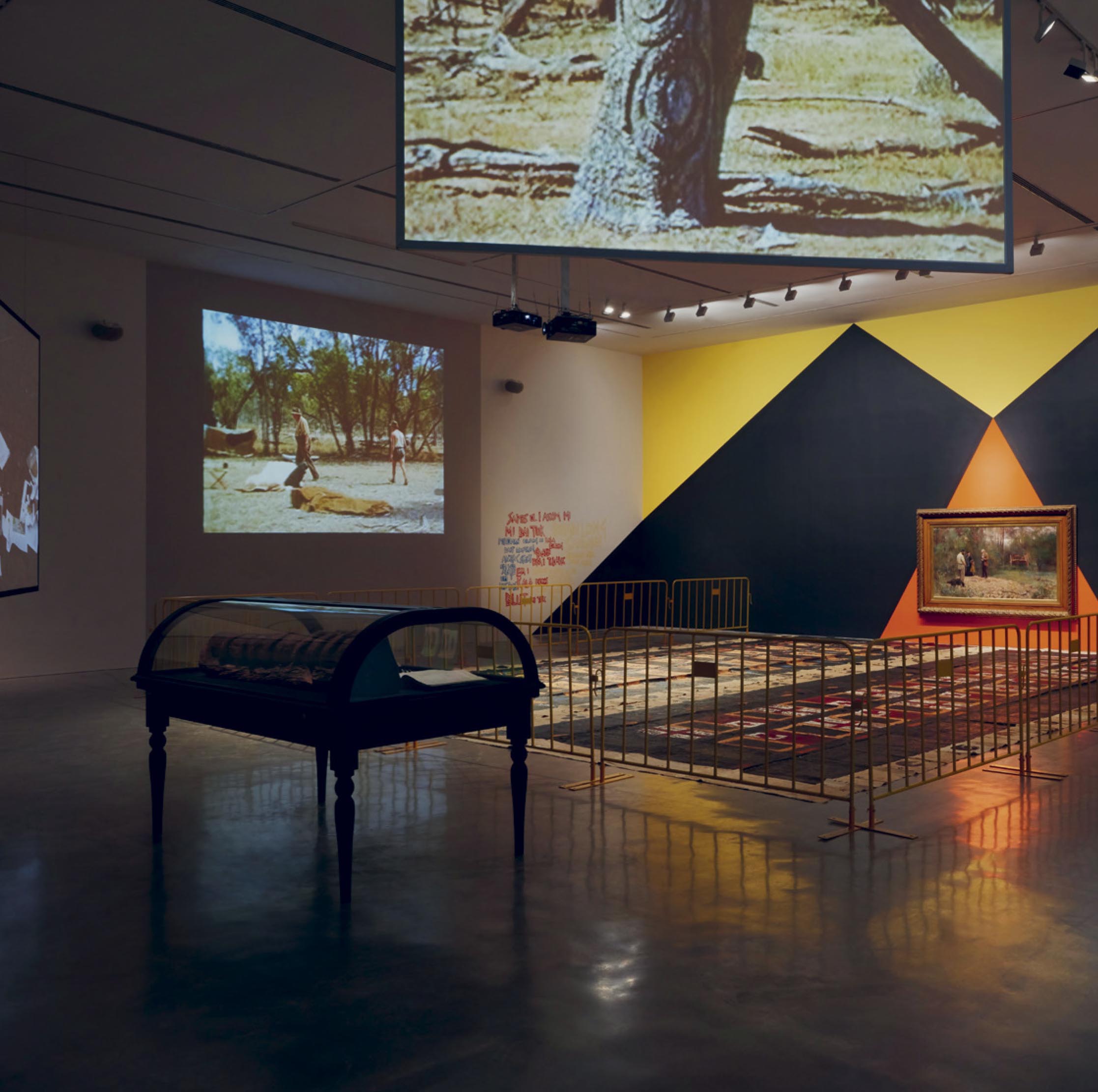
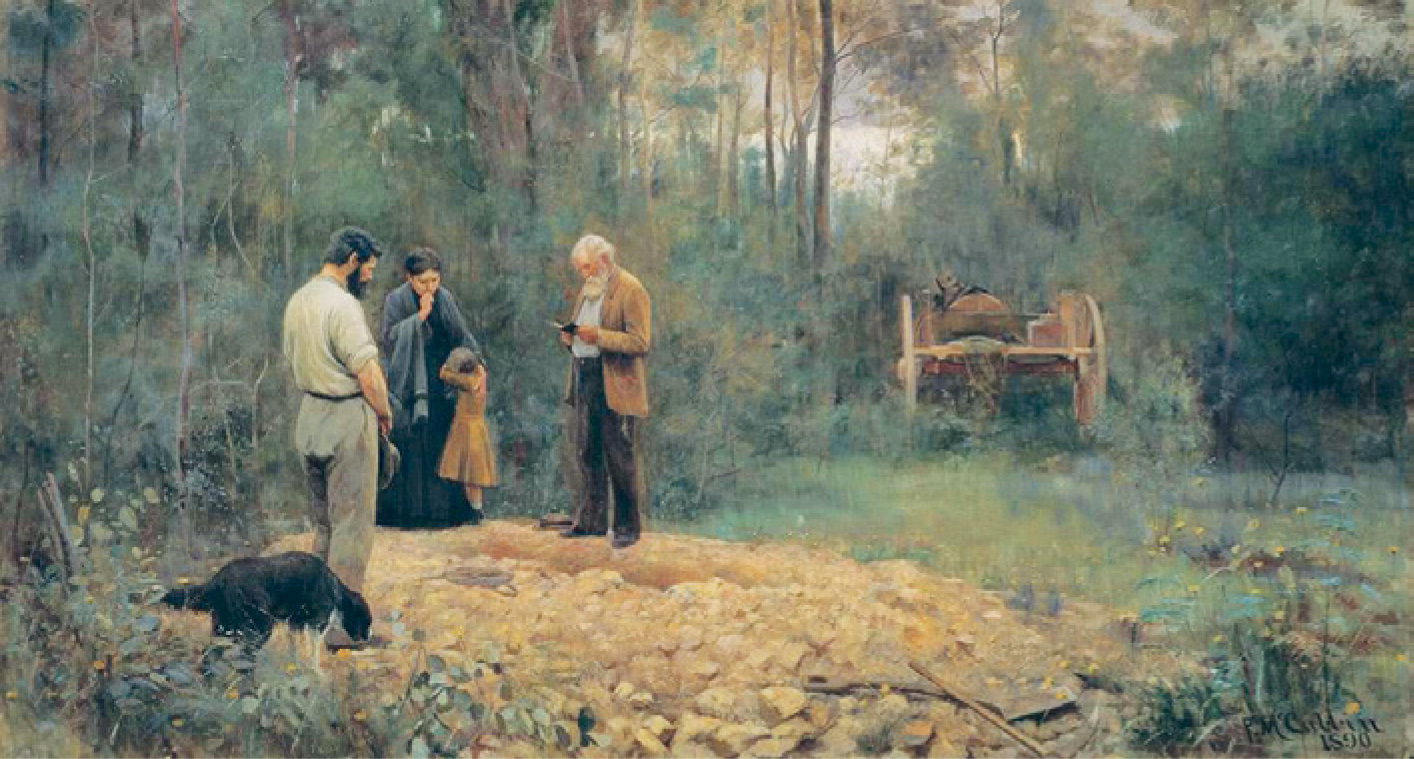
↑ Frederick McCubbin, A bush burial, 1890, oil on canvas, 122.5 x 224.5 cm. Installation progress view (2020) at the Museum of 30 Contemporary Art Australia. Courtesy Geelong Gallery. Purchased through public subscription. Photograph: Zan Wimberley
1. Front Cover
1. Front Cover
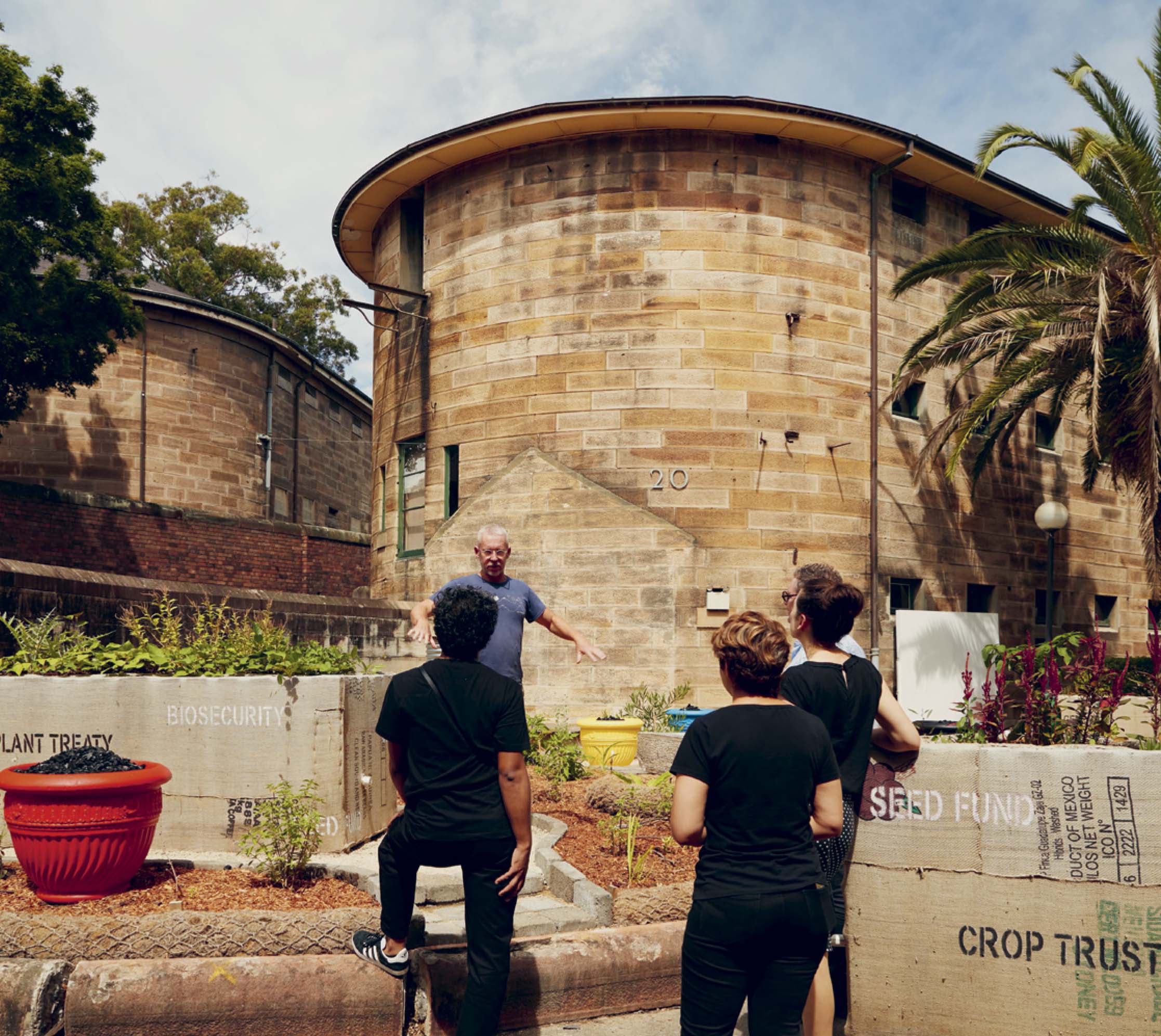
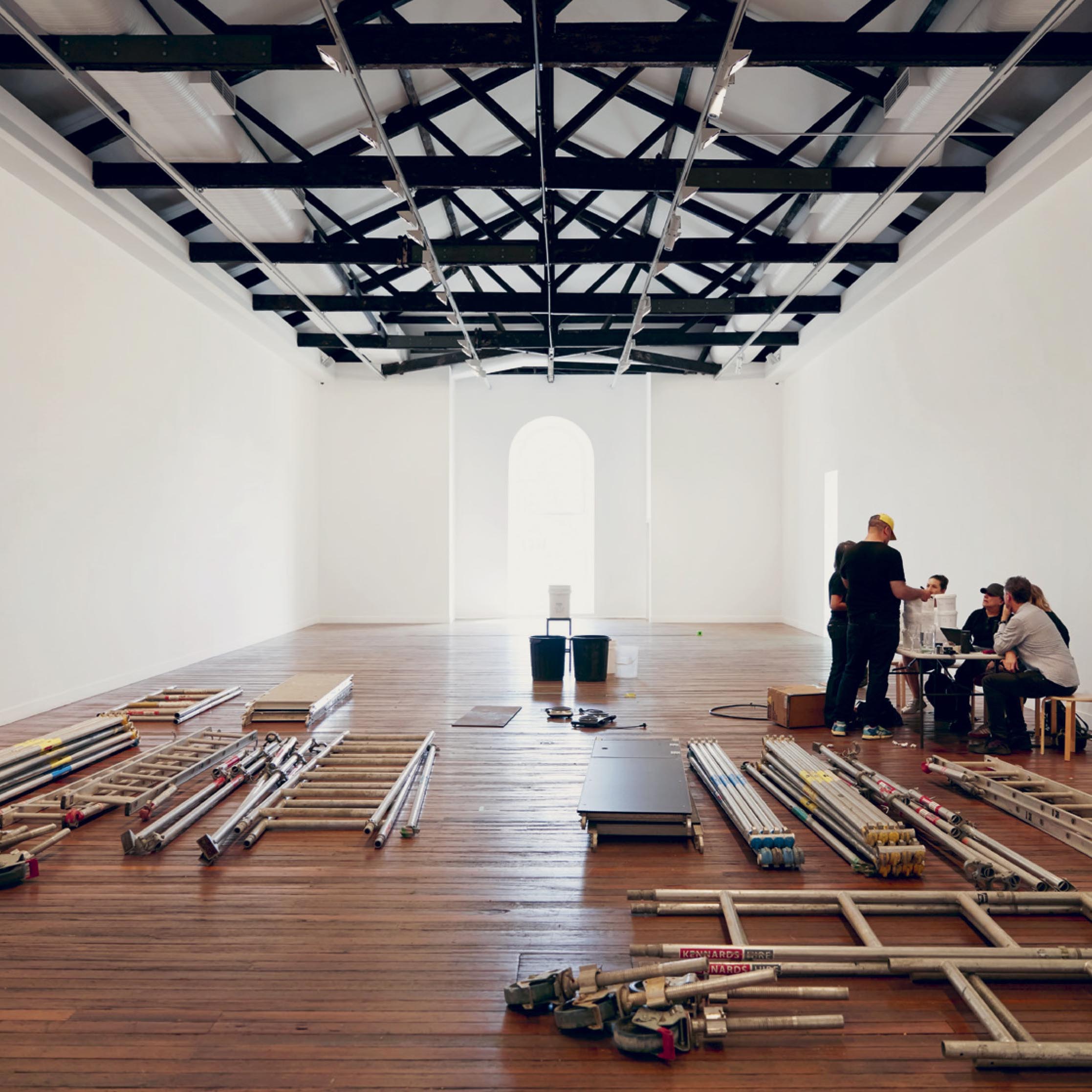
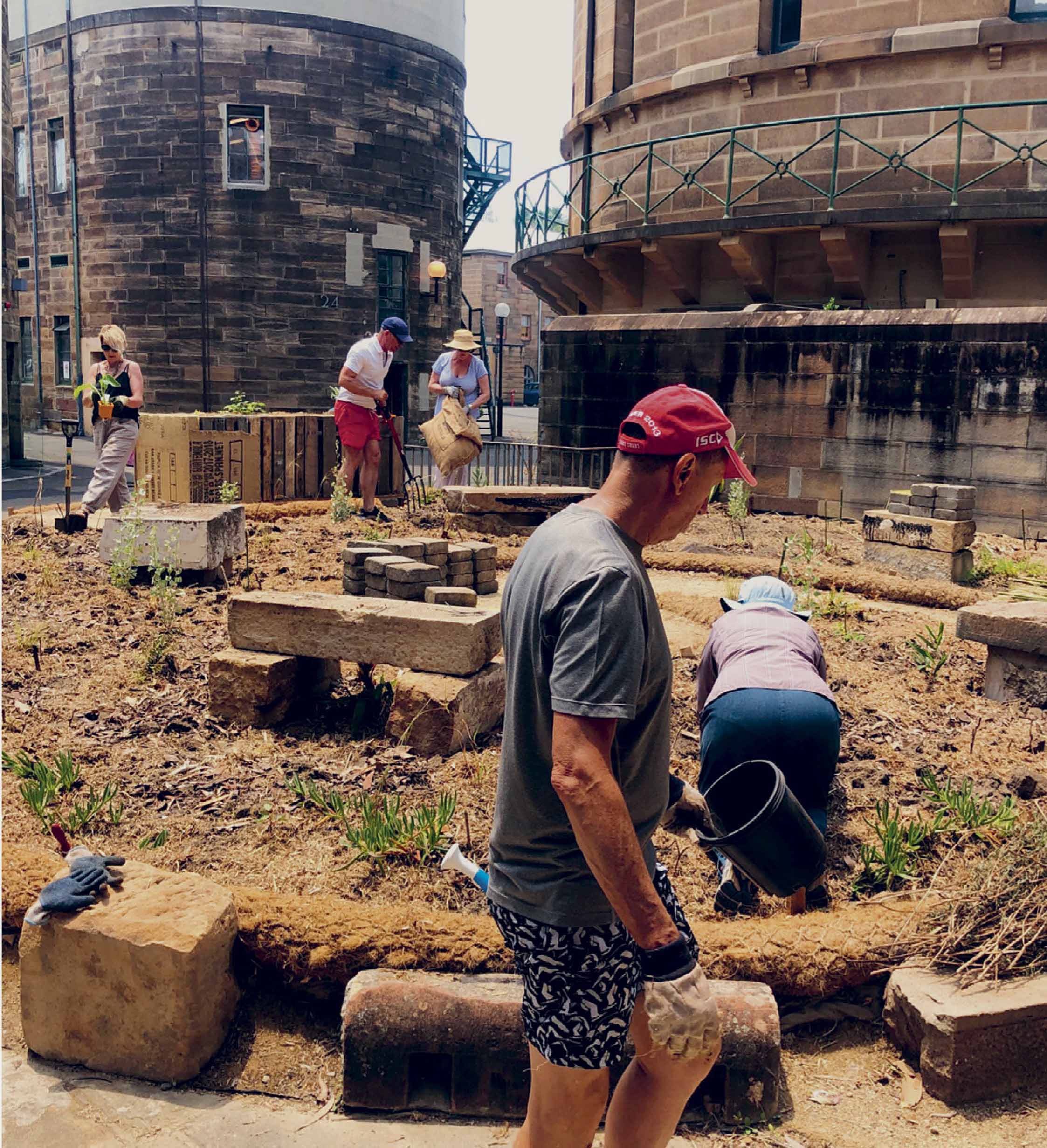
← ↖ Installation progress view (2020) at the Museum of Contemporary Art Australia. Photograph: Zan Wimberley. ↑ Andrew Rewaldinstalling Alchemy Garden, 2019–20, plant matter and repurposed found materials, dimensions variable. Installation progress view (2020) 32 for the 22nd Biennale of Sydney, National Art School. Photograph: Zan Wimberley. Courtesy the artist.
1. Front Cover
Teresa Margolles installing Aproximación al lugar de los hechos (approximation to the scene of thefacts), 2020, mixed media installation, dimensions variable. Installation progress view (2020) for the 22nd Biennale of Sydney, National 34 Art School. Photograph: Zan Wimberley. Courtesy the artist and Galerie Peter Kilchmann, Zurich.
1. Front Cover
1. Front Cover
1. Front Cover
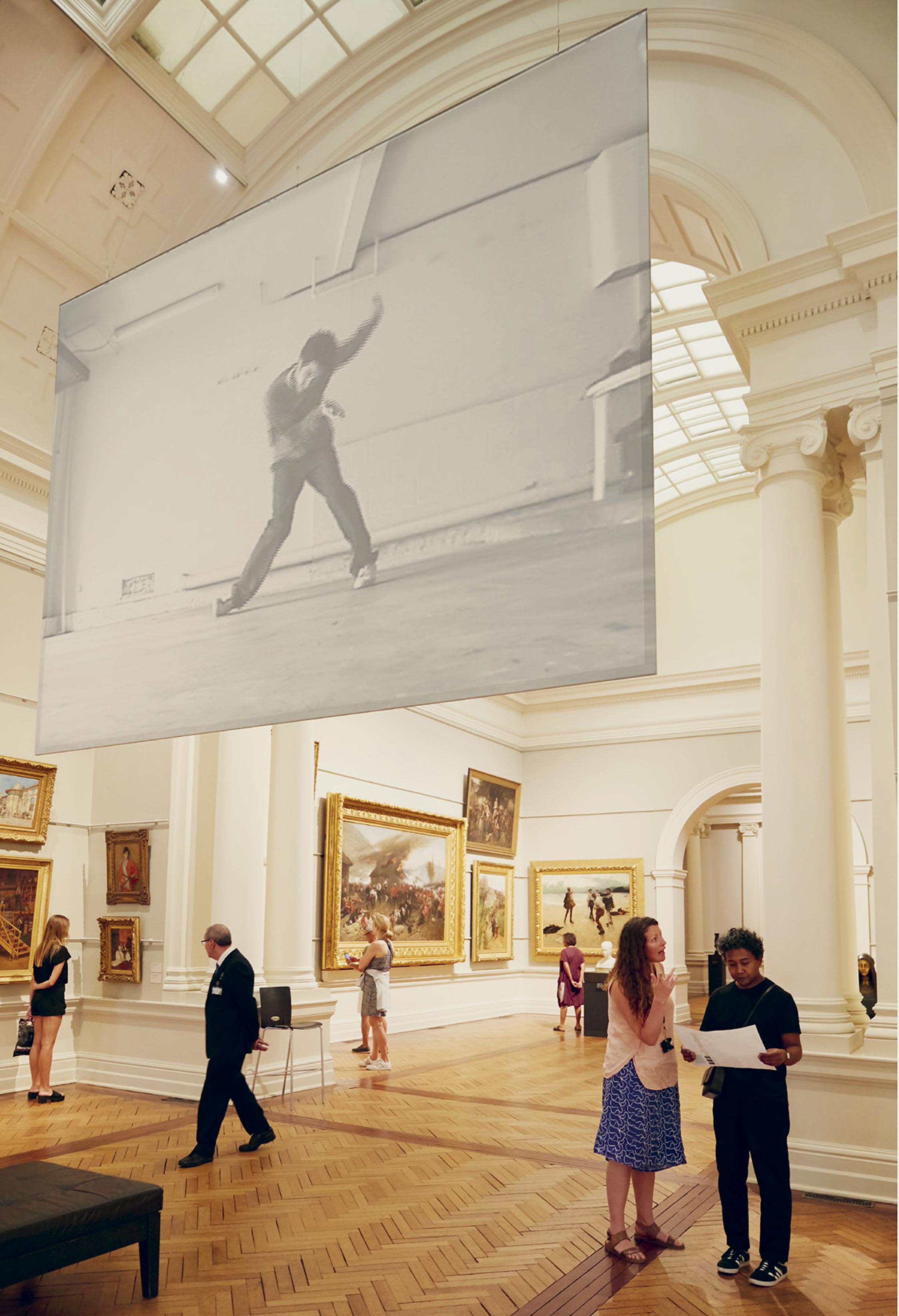
↖ Nicholas Galanin, Tsu Heidei Shugaxtutaan Part I [We Will Again Open This Container of WisdomThat Has Been Left In Our Care Part I], 2006, single channel video, 4:37 mins. Artworks pictured: Alphonse de Neuville,The defence of Rorke’s Drift, 1879; Fritz Beinke, The juggler: a village fair, 1873; Friedrich Kallmorgen,A spring day (1887); Frank William Bourdillon, On Bideford Sands (1889). Collection of the Art Gallery of New South Wales.Installation view (2020) for the 22nd Biennale of Sydney, Art Gallery of New South Wales. Photographed in the Grand courts at ArtGallery of New South Wales, Sydney. Photograph: Zan Wimberley. Courtesy the artist. ↑ Ester Grau Quintana installing Retauledels penjats (Altarpiece of the Hanged People), Josep Grau-Garriga, 1972–76, woven wool, cotton, sisal, jute, hempand synthetic fibre, 1,000 x 600 x 300 cm (installed). Installation progress view (2020) for the 22nd Biennale of Sydney, Art Gallery ofNew South Wales. Photographed in the Grand courts at Art Gallery of New South Wales, Sydney. Photograph: Zan Wimberley. 36 Courtesy Esther and Jordi Grau.
1. Front Cover
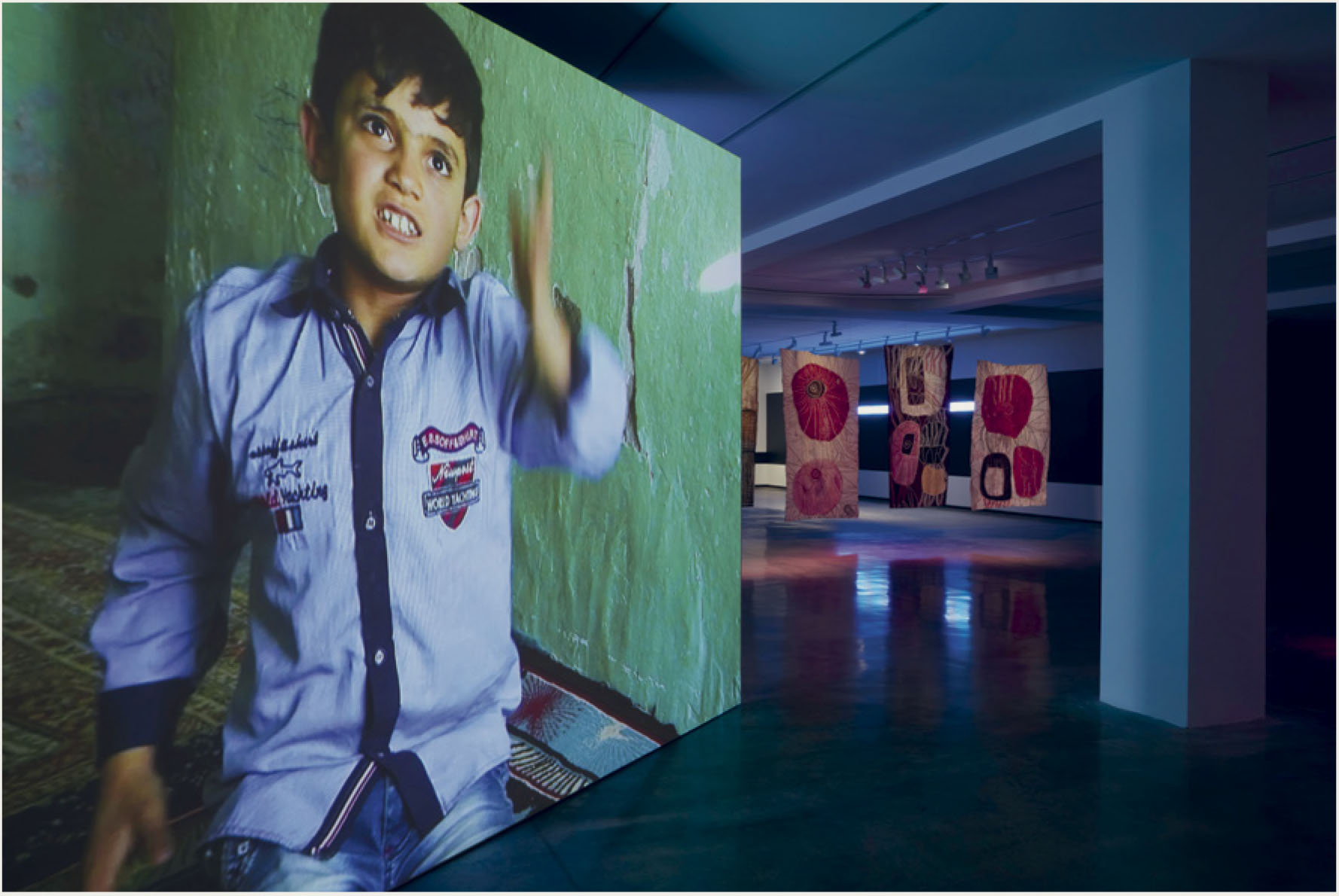
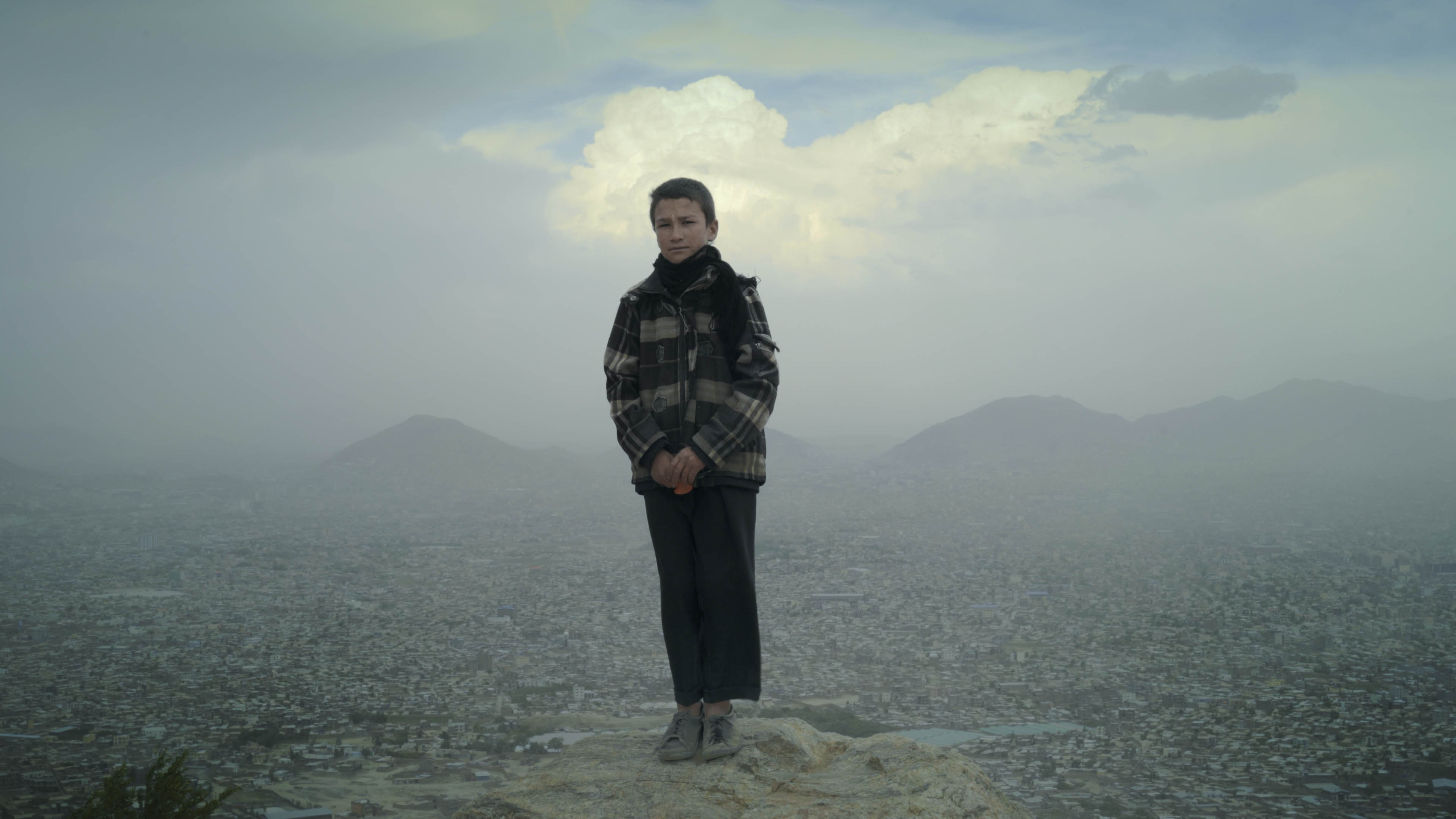
↑ Aziz Hazara, Bow Echo, 2019, 5-channel digital video, 4:17 mins. Installation progress view (2020) for the 22nd Biennale of Sydney, 38 Museum of Contemporary Art Australia. Produced by the Han Nefkens Foundation. Photograph: Zan Wimberley. Courtesy the artist.
Hannah Catherine Jones installing Owed to Diaspora(s), 2020, mixed media installation, dimensions variable. Installation progress42 view (2020) for the 22nd Biennale of Sydney, National Art School. Photograph: Zan Wimberley. Courtesy the artist.
1. Front Cover
Hannah Catherine Jones, Owed to Diaspora(s), 2020, mixed media installation, dimensions variable. Installation progress view48 (2020) for the 22nd Biennale of Sydney, National Art School. Photograph: Zan Wimberley. Courtesy the artist.
1. Front Cover

DIASPORA
FOOTPRINT
CYCLE
PUZZLE
OCEANS.

The following is a conversation that took place on 25 February 2020 betweenDr Jennifer Lavers (Canadian scientist, Adrift Lab), Hannah Catherine Jones(English/Bajan artist), Paschal Daantos Berry (Curator of Programs andLearning, Biennale of Sydney) and Brook Andrew (Artistic Director, 22ndBiennale of Sydney). Edited by Jessica Neath.

Brook:
I would like to start by reflecting on the words of Elicura Chihuailaf, a Mapuchepoet and oralitor born in the community of Kechurewe, southern Chile. He isexhibiting poems as banners and an LED sign at the 22nd Biennale of Sydney:There is a concept in mapuzugun or mapudungun called ‘Itrofill mogen’or ‘Itrofilmongen’ that means ‘biodiversity’. If we describe this concept, itmeans the totality without exclusion, the integrity of all living things withoutfragmentation of life … A human being, a living being, a stone – apparentlyinanimate – belongs to a place and has a ngen/spirit. This ngen belongs toa space as much as the human being does, and as they both share it thereis therefore a relationship of reciprocity, of interdependence … If we loveourselves, we can understand that diversity is extraordinarily valuable andthat it is essential to listen to the conversations of people, of the earth (nature),of the universe that we inhabit and inhabits within ourselves. This meansalways taking into account the circle of memory (which is present because itis past and future at the same time): silence, contemplation and creation. Theconversation is creation that is sustained in the voices – the thought – of theancestors who speak because they live in us. Conversation is an art in which themost difficult thing is not to learn to baste our thoughts; the most difficult is tolearn how to listen.We should listen – they are telling us– to the conversation of the trees; not onlywhat they communicate to us, but also to

Denilson Baniwa
1. Front Cover

their dialogue with other trees, to understand how they relate to each other (thedaily life of the forest) … Then, the trees and the forest are also telling us aboutthe territory and the history where they belong; of the air, the water and theclimate that has surrounded them … Human beings have been losing the abilityto understand the language of the earth …

There is an awareness of urgency in the world today, possibly due to a lackof engagement with, and listening to, the earth, as Elicura proposes. Regardlessof whether or not one believes in climate change, if one supports the movementof people due to war or other events, or even if one believes that someonecan be free of religious belief, attain gender equality or act on the humanetreatment of animals … There is a fundamental series of fears and obsessionsthat often reflect on economies of not only finance, but also of access to cleandrinking water, food and entertainment, or lack thereof. What does this mean foryourselves and your own practices, and those that involve broader communityand artistic collaborations?

Jen:
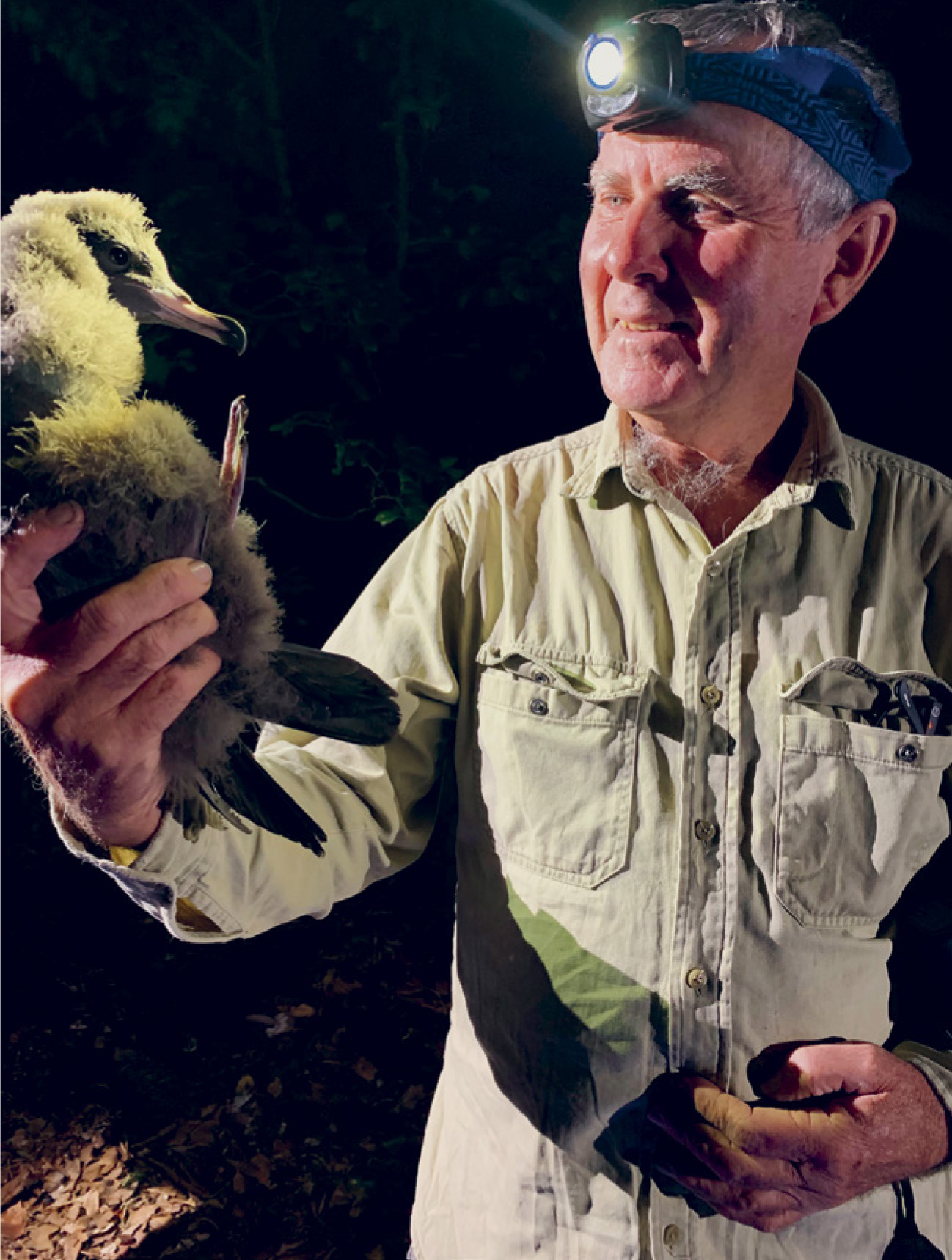
I am an environmental scientist, and mainly a marine scientist. The core ofwhat I do is the study of plastic in the ocean. For the past fifteen or so years, Ihave been working in a remote place called Lord Howe Island, which is about600-700 kilometres off the east coast of Australia.One of the challenging things with plastics and most environmentalpressures is that, as scientists, we can’t be all-knowing. We can’t be theeyes, the ears; we can’t see and do and measure everything and so weoften have what we call indicator species, or sentinels, that we selectbecause they serve a really valuable purpose. They basically are oureyes and our ears. We monitor one or two things really intensely andthey hopefully tell us everything we need to know. If that species or thathabitat is doing really well, then you can infer that things in the broaderenvironment are probably okay.I have become so incredibly passionate about Lord Howe Island, theseabirds that I study there, and the other ecosystems that I study all aroundthe world. I keep pushing the limits of where I go in this world, virtually to

1. Front Cover

the most remote locations you can get to on the planet without going to,like, the bottom of the Marianas Trench or to the moon. Regardless of whereI go, I see a significant human footprint. It is so significant that it’s puttingthese last vestiges of pristine paradise in peril. As a scientist and a sciencecommunicator, I feel it is my responsibility to tell the story of these places andgive a voice to the voiceless. What is the big purpose of me going there if I amthe only person that gets to go there, that gets to see what these places looklike and see the tragedy that is unfolding?

Henderson Island, 2015. Image courtesy Dr Jennifer Lavers, Adrift Lab.
1. Front Cover

But also, as a scientist, what is the point in monitoring these places sointensely to show patterns in trends and changes over time and talk about howspecies are declining or habitats are being disturbed, but then as a societywe do nothing about it? This is what I see unfolding before me time and timeagain. Wherever I go in the world, it is just the same story. You can’t escape thehuman footprint. There are incredible lessons that can be learned from this, butwe aren’t learning the lessons. We aren’t changing.

Brook:
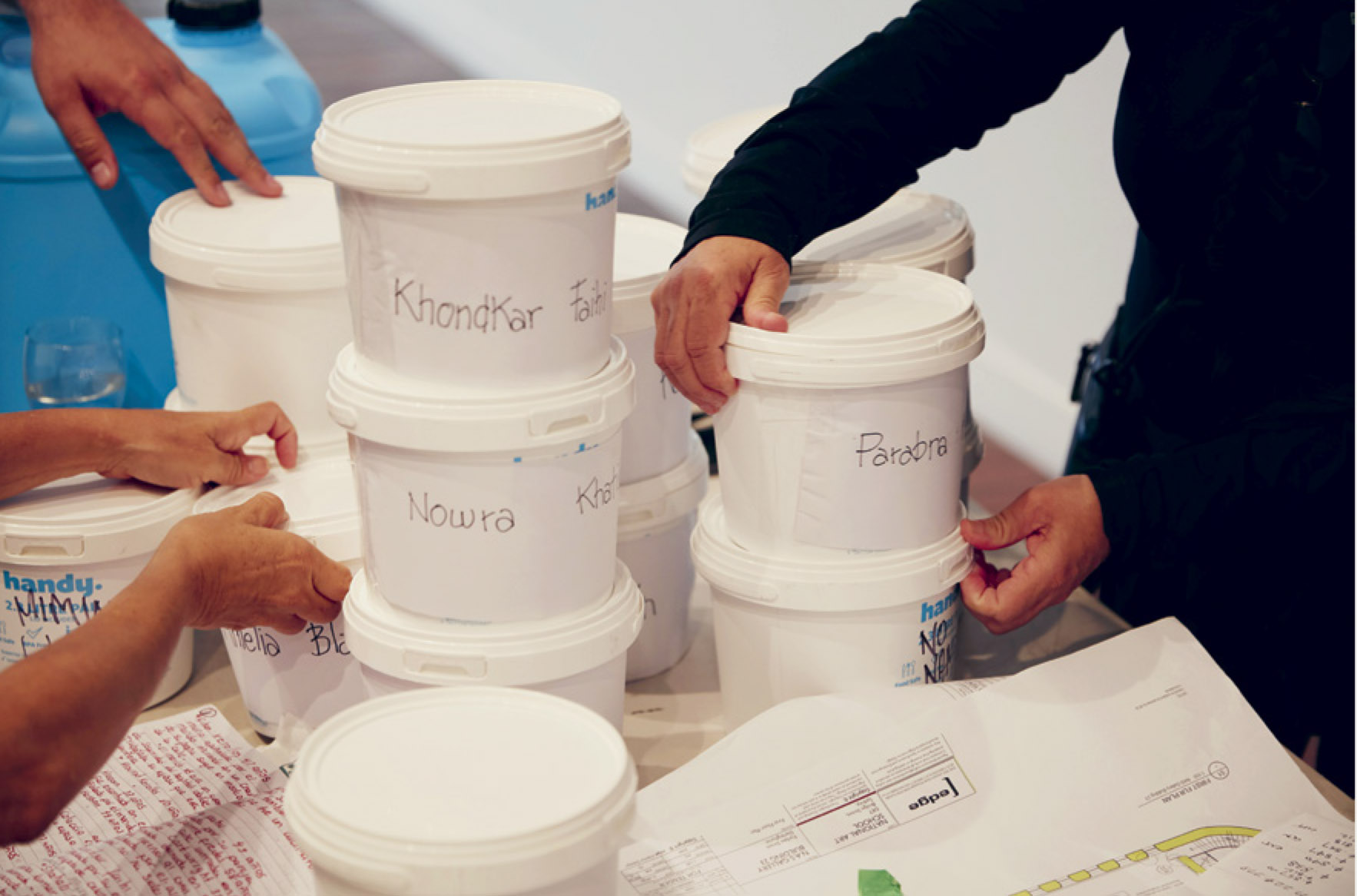
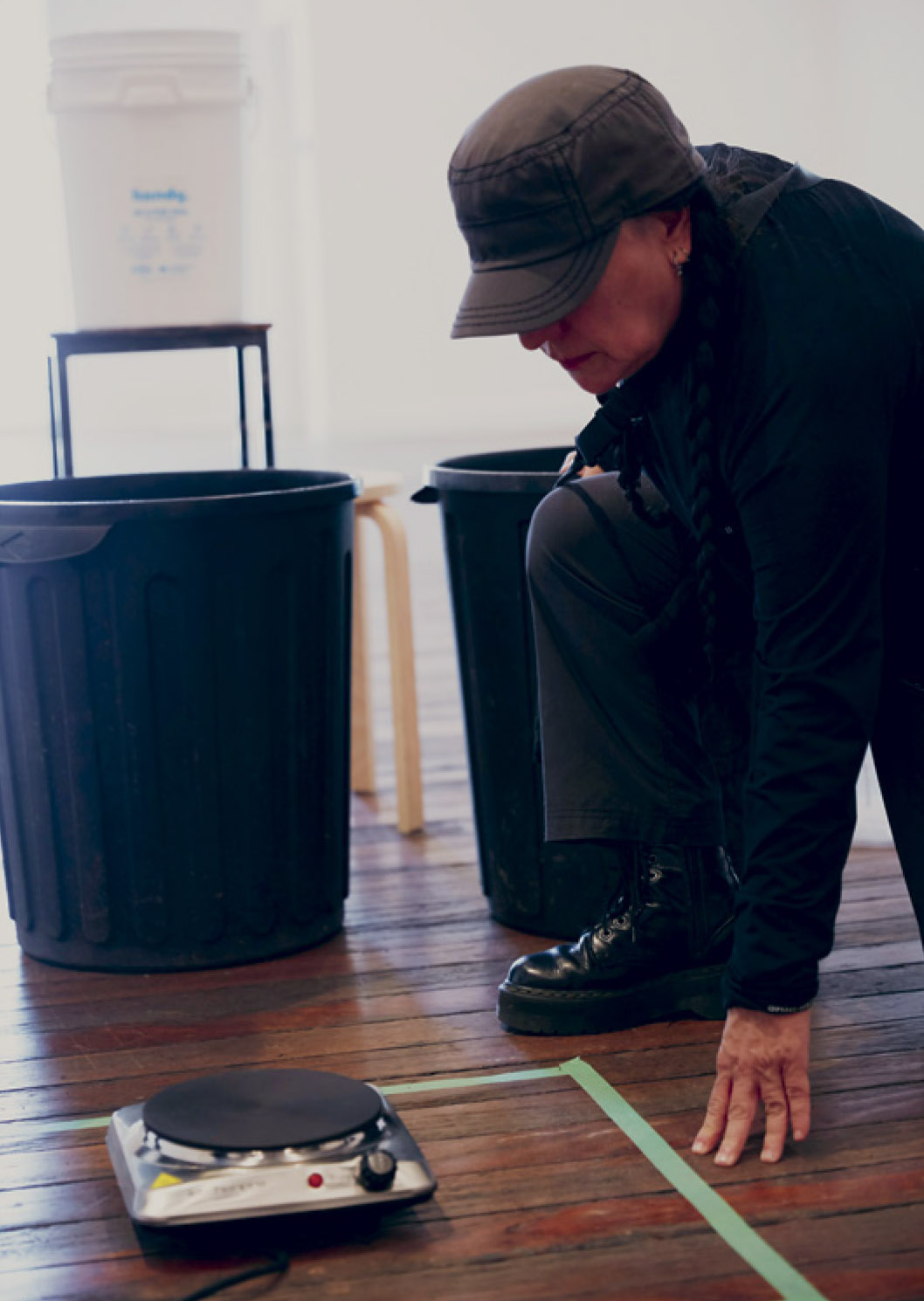
Why do humans seem to be repeating the same old mistakes again – cyclictensions of repetition that extend to extreme violence? I immediately reflecton the new haunting process photos and installation of Mexican artist TeresaMargolles’ work on femicide. This work signalises the physical sites where,as Teresa said to me recently, ‘assassinations and disappearances of womenoccurred.’ These violent events took place in Sydney and its surroundingsuburbs. Teresa photographed volunteers signalising each scene usingwater and absorbing the essence of the site; that water is then used in theinstallation. Teresa said to me that for her, the stabbed body, with it multipleopen wounds, is reproduced within the interior of her installation, where waterdrips and evaporates on an electric hotplate. Drop by drop by drop, like anever-closing wound, always suppurating.Another site-specific tension is expressed very differently in thework of Mexican artist José Davila, who has created sculptures fromobjects on Cockatoo Island that hold memories of both colonial and recentincarceration, on the site where ships were built for the Second World War.The sculptures are metaphors for the forgotten welfare of sandstone, metalsand discarded objects of power. When I look at these sculptures, they teeterand I wonder if they are going to fall, yet they hold themselves togetherthrough uncanny support, which is of course gravity. It is surprising – theysurvive to reflect our own rejection of them, like a memory trying to get backto a place if visibility.Paschal, could you talk about some of the communities that you’ve beenworking with, and if they themselves reflect on the discarded memories orstereotypes that form them from outside of their control?

1. Front Cover

neighbourhood where, through a coalition of Blacktown Arts, Bidwill Uniting,Curious Works, Learning Ground and PYT Fairfield, the residents put togetheran event that redefined the community as a place that celebrated survival,trying to shift the way young people saw themselves and counter how the media portrayed Bidwill. It is an important project that hands back autonomy toa community that is often defined by everybody else.

Another NIRIN project that asks urgent questions is a Biennale partnershipwith Information Cultural Exchange, or I.C.E., which is a Parramatta-basedorganisation. The urgency of life and death is central to their residency projectin the dementia unit of a nursing home in Chester Hill called Abel TasmanVillage. There have been artists in residence at that site for two years. ArtistsVictoria Harbutt, Liam Benson and DJ Black President are working withdementia patients and Clinical Care Manager Sophia Markwell, on a programthat invites the audience to ponder the edge of life. It is a critical propositionabout how we might face our own futures and how as artists and arts workerswe might collaborate with the aged. This work transcends the often-reductivemeaning of what dementia is and also, as a bigger conversation, what death isor what it means to be on the precipice of being alive.

I.C.E. have another project that brings together two youth groups, theRenaissance Scholars and the New Age Noise Collective, who, throughcollaboration and exchange, are finding space for a critical look at the way weas institutions create those membranes that stop young people from engagingwith what we do. Both groups will spend the three months of the Biennaleattending the exhibition and programs, which will culminate in a critique ofNIRIN in the last week of the Biennale.

1. Front Cover
Hannah Catherine Jones installing Owed to Diaspora(s), 2020, mixed media installation, dimensions variable. Installation progress42 view (2020) for the 22nd Biennale of Sydney, National Art School. Photograph: Zan Wimberley. Courtesy the artist.
1. Front Cover

Brook:
Could you tell us how they came together?

Paschal:
I.C.E. has been working with Granville Boys High School for several years, andthe Renaissance Scholars come out of a school-based lunchtime club. NewAge Noise Collective is a group of young gender diverse people who havecome out of I.C.E., engaging in critical discourse and community building.The last project I want to talk about is about forgotten places, which is theBlacktown Native Institution, something that I appreciate you are very familiarwith, Brook. It is a place that was established in the 1820s for the indoctrinationof Indigenous children in European culture and religion; effectively, one ofthe first missions established in this country. In 2018, it was handed back tothe Dharug community through the Dharug Strategic Management Group. Inpartnership with Blacktown Arts and Blacktown City Council, and Create NSW,we will witness the transformation of this site through ceremony, communitygatherings and the beginning of a revegetation project.The Dharug community is redefining and reimagining the site outside ofthe problematic colonial constructs and definitions that always tether places totheir traumatic histories.

Brook:
The thought-provoking aspect of these projects is that we’re really looking atfrontiers. Jennifer reflecting on remote sites polluted with plastics, out of oursight and mind, and the Blacktown Native Institution – the first site of officialremoval, and trauma, of Aboriginal children. Most people have no awarenessof this incredibly painful and intensely powerful site, and how Major GeneralLachlan Macquarie’s actions were the first step towards broader officialpolicies of the removal of Aboriginal children. These are examples of a frontier,it’s a total edge and often out of sight.

1. Front Cover

Hannah, your work is urgent and explores musical composition, thediaspora and self-recognition, a diverse but cohesive practice …

Hannah:There’s a lot that actually resonates across what you’ve just said Paschal andJen. I mean, the word ‘urgency’ – everything I do feels pretty urgent. My mainresearch is around the (African) diaspora which is really to do with not havinghad access to that information growing up through school and also due tothe trauma of my parents and grandparents. I have started this project calledThe Oweds, which I see as forms of cultural debt to myself at the very least,to re-educate myself and to share this work so it circulates. There is a hugeemphasis upon telling stories, upon this idea that if you don’t tell your ownstories someone else will tell them for you, which obviously totally resonateswith what Paschal was saying about the Blacktown Native Institution

Blacktown Native Institution Site, Dharug traditional owner Shanaya Donovan at the opening of BNI handover, 2018. 54 Photograph: Joseph Mayers. Courtesy Landcom, Sydney and DSMG, Sydney
1. Front Cover

prioritising, privileging diasporic peoples as conductors, as the composer, asthe soloist, as these kind of lead roles within the orchestral system which initself I see as a metaphor for a political system. I want to run a democracy, soI encourage this D.I.Y. conducting school where people can have this momentof, what is essentially a lot of power and respect through music. I know thatthat it is influencing people’s lives for the better and that it is ongoing. It’shappening at rehearsals every Wednesday night, it’s independent of me now.The most important thing about The Oweds is that they exist throughsound. There’s image in some of them, but it’s predominantly about sound –it’s all about vibrations and frequencies.

Brook:I know that for me to be invited by Adrift Lab on a science research trip toLord Howe Island was such a privilege … Jen, you yourself have talked aboutsound, smell and many other ways that animals signal to each other and tohumanity. Like the aromatic smell of smoked fish papers sourced from WestAfrican smokehouses in Ghanaian author and artist Ibrahim Mahama’s A Grainof Wheat (2015–18) exhibited at Sydney’s Artspace, or the pungent smells andtastes of octopus ink mixed with vodka in the installations of French artistLaure Prouvost … The smell of smoke that will occur throughout NIRIN forFirst Nation healing ceremonies … Scent is a powerful sensory ability for allliving animals. Jen, can you share the hermit crab scent story?

1. Front Cover

Jen:
A lot of my work over the last decade or so has been looking at plastic onbeaches, which at first may seem harmless, especially in a remote location.However, what we have found is that plastic bottles and containers are a hugeproblem. Unfortunately for things like hermit crabs, when a plastic bottle isresting peacefully on a beach, if it happens to come to a resting position whereit’s on a slight angle with the lid off or the bottle broken, there is an entrypoint for the crab. If that opening is at an upward angle, when the crab fallsinto the container the angle prevents it from getting back out again, becausecrabs have little spikey legs that don’t have any claws or a way of grippingonto the smooth surface of a plastic bottle. They can’t come back out againand those bottles sitting in the blazing hot sun act like a greenhouse andbecome extremely hot and you can imagine what happens. This is a very tragicsituation. You think of all of the beaches you’ve been to all around the world,and the fact that there are bottles, containers and all kinds of things virtuallyon all of the world’s beaches and there are also hermit crabs on thousands ofthe world’s beaches. There’s a collision of native wildlife and human debris,but it’s actually a lot more sinister than that.

Crabs over eons have evolved as nature does, to be very specialised, andthe number one hot commodity in crab society is an empty shell. Crabs haveto moult every year and remove their own natural red shell that’s made outof chitin, that’s the only way they can grow to the next size. When they growto the next size, they obviously have to find a shell that is a little bit biggerand suitable, and so shells are a limited resource. Crabs have evolved thisincredible sense of smell. You wouldn’t think that a hermit crab can smell, butthey can, and that sense of smell is attuned to one thing and that is the smellof their dead comrades. That is because when another hermit crab dies, thatmeans there is a shell that is now available.

If you put those pieces of the puzzle together, basically what you haveis everywhere around the world where we have plastic bottles and containerswashing up on beaches, crabs then become entrapped. When they becomeentrapped they die, when they die they release a scent, the scent attractsmore hermit crabs, additional crabs fall inside the bottles and basically it just

1. Front Cover

becomes a cascading event of more and more and more dead hermit crabs.The maximum number of hermit crabs I’ve ever recorded inside of one plasticdrink bottle is more than 500.

Brook:
Hannah was reflecting on ongoing trauma and the diaspora … and the wayin which these stories that we are all reflecting on, well, people might ask:how does art bring this together? How do scientists, scholars, musicians andcommunity people bring all these stories together? I was just wondering if youhave had conversations about your own disciplines in regards to shifting thenarrative. I know, for instance, that you Jen have worked with other artists. Isthere a possibility of connection in what you are all saying? Are there thingsthat speak to one another?

Jen:
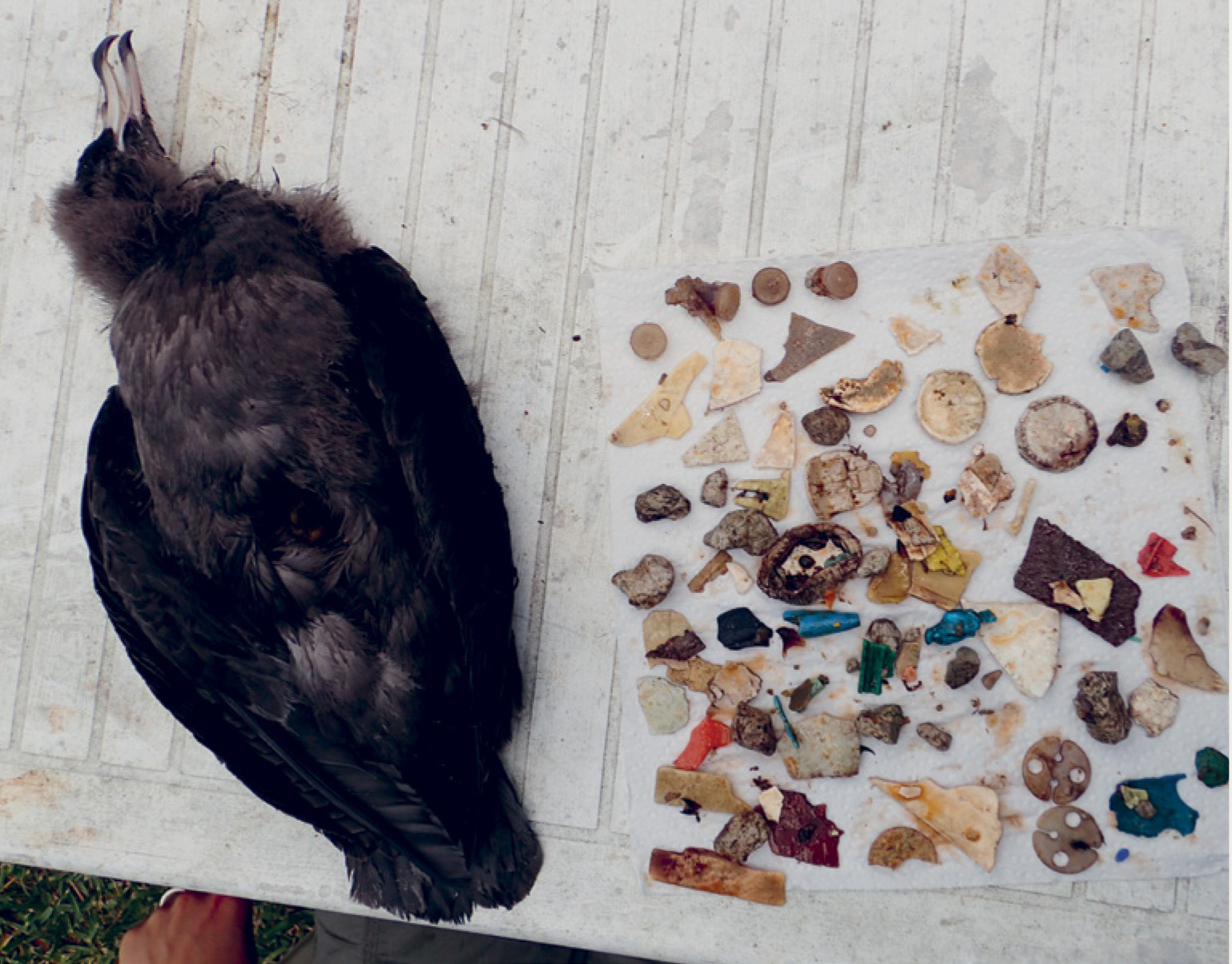
I was thinking when Paschal was talking earlier, one of the problems that I amconstantly struggling with is that we keep doing the same thing over and overagain. We keep making the same mistakes and how do we learn from this?How do we prevent this from happening? What role can science play in tryingto stop this cycle? And so in my small way, it is not a perfect solution by anymeans, I have partnered with artists or other scientists or just other thinkerswho approach these environmental issues in new and innovative ways so thatwe’re communicating to a more diverse, broad audience. We’re engaging withindividuals who normally may have turned off from the issue.As scientists, we traditionally only communicate from our ivory tower invery dry, technical language. We only communicate among ‘our own people’within the science community and don’t reach out. Science communicationis becoming much more of a thing and yet there’s still so much room forimprovement. We can put out all the videos we want of seabirds dying withhundreds of pieces of plastic in their stomach or a whale becoming entangled,but for a lot of people that’s just too confronting.If you want to get people connected, then it is that sense of smell andtouch and sound and getting people to really understand and feel in theirheart what these animals are about and just how crucial they are to our kindof survival.

1. Front Cover

Hannah: In terms of what Jen is saying about communication – how do we breakthrough? You see all this imagery of the plastic in birds and feticides, and weall respond to a heartbreak story, but we also become desensitised. I thinkthat so much of it lies in literally the breakdown of community and hyperindividualisation. I mean, the way in which I experience it is that, you know,there’s a lot of pressure to be like, ‘make sure you do your recycling, take outyour recycling, use a reusable container…’ Do this, do that.All these are individualised solutions. Yes, we should be doing that. Yes,most of us are. But that’s not the thing that’s going to flip it. It’s obviously thehuge, huge companies that are making these decisions that negatively affectus all – they’re beyond our control. Then there’s also the kind of crushingreality of just kind of existing and the cycles that are set up in the world for usto have our Netflix, have our Deliveroo, and just ride out the depression. That’sthe way it is: depression in a medical sense and also in just a general sense,particularly if you’re diasporic, especially when we’ve got Brexit, we’ve gotBoris Johnson, we’ve got Trump, we’ve got Bolsonaro.It’s devastating and I think of the exhaustion of trying to survive underthese conditions, the amount that you have to work. What you need to relaxafter you’ve done your work is time alone to try and break through that

exhaustion, which I think is really important. I don’t know what the solutionis. I mean, getting together in real time and space outside of our solo screendominated lives is, I think, part of the solution. There’s a breakdown ofcommunities.

Paschal: I think what I find interesting about a project like FUNPARK, for example, is thatthere were all these systems put in place in the 1970s, creating welfare statesand immobilising people by placing them on the peripheries, neighbourhoodsoften easily forgotten by governments. It took Karen Therese, who grew up inBidwill in the 1970s and 1980s, to return in 2014 and ask: how do we defineour own narrative? How can young people in stigmatised communities beempowered to define their own identity?Through collaboration, by resurrecting memories of the nearbyWonderland fun park, she brought back the idea that there used to be a lot offun in this neighbourhood. She used fun parks as a curatorial device to be ableto remind people within the neighbourhood that you could enact this kind ofsmall revolution and that you could activate a space between the communityand government and say: ‘We’re not waiting for your handout; we just wantyou to be part of the conversation to solve this cyclical culture of poverty, thisturbid violent thing that nobody wants to address.’

1. Front Cover

Brook:
I think taking back your own communities, or how one perceives and makesaction for one’s self/selves, is very empowering. The installations andperformances of Sāmoan/Persian artist, curator and author Léuli Eshrāghi andthe Central/South American Colectivo Ayllu, they both interrogate First Nationssexuality pre/post/ongoing colonisation – we see clearly the destructive anddisabling force of Christian conquest, ongoing racism and prejudice oversexual diversity and murder of queer and trans peoples, and how this hascreated emotional, cultural and psychological riffs. Though this also creates aspace of action, revitalisation and taking back control, it is often very difficultto create work in these spaces, though it is essential to do so.I was wondering, Jen, when I hear you talking about your work – there isurgency, but do you feel like you are in a bit of a cave? Is there any joy at theend of the day? I mean, how do you find relief or release? Are you sparked bysomething more recently, some kind of social change?

Jen:
I’ve had to get really honest with myself and, also, with anyone who asksme that question. So, the honest truth is that I would say, 90–95 per cent ofthe time the days are extremely hard and I suffer from crippling eco-grief,or what I call pre-TSD. I don’t call it post-TSD because for me the war on theenvironment, the thing that I love, the thing that defines who I am and what I doevery day, that war doesn’t have an end date. It’s not post for me.The thing that I love, everything that I do, the thing that drives meonwards, that has defined my career, my life, as an Indigenous person, is thething that I feel the most connected to in this world, you know, nature. I literallyhave spent my entire 41 years on this planet watching it be destroyed and thespecies that I feel the most connected to are declining extremely rapidly andto the point where I’ve sometimes said to people that I feel like one of my mainroles in this world is to document the extinction of species. Those are somepretty harsh realities.Are there glimmers of hope? Yes. And are there other bright spots? Yes. DoI cling to them? Yeah, absolutely. Lord Howe Island is what I call my happy place.It’s where my husband proposed, simply because of that, it is that important to

1. Front Cover

me and I can easily get lost in this one part of the forest where the light specklesthrough the palm fronds and there is just nothing but shearwater burrows,shearwater burrows on the floor and it’s just beautiful white sand and palm treesand sunlight going through the forest and it’s nature as nature is intended.When I filmed a documentary a couple of years ago, the producer waskind enough to ask me: ‘What is it that you want out of this?’ I said, ‘I wantthe audience to see the birds as I see them, not just as these small blackthings that kind of have a scary beak and sharp claws, you know, thinking“why should I care?” I want them to walk out saying, “I care, these animalsare incredible, I see why someone would dedicate their whole life to this smallbird.” You know, so it’s no longer just an object.’ They aced it. The producersjust did the most remarkable job. So, I kind of let my life simmer in thosemoments and that’s where I go back to.When people ask me that, you know, at a Q&A session or something likethat, I kind of try to transport them for a moment into those places becausethat’s worth fighting for

1. Front Cover

Hannah:
I think a lot about empathy and I’m thinking about, you know, the potential oftransforming these pieces of plastic into something else. I’m trying my best tothink of the parallels between what we’re talking about. I admire how broad thisconversation is, but I think it’s essential we acknowledge that we are not makingexplicit parallels between animals and diasporic peoples. Ultimately, I think it’simportant that scientists and artists are having a chat together because there issuch a huge hierarchy in what we consider to be the top knowledge, of theoryover practice in art, science over art, and so on and so forth.I’m not hopeful and obviously, I’m not a scientist. I’m hearing everythingthat you’re saying Jen, and the pain of watching the planet – not the planetnecessarily, but the species, upon it – die as a result of this infinite andimmeasurable greed. I don’t know what happens to people at a certain age,with a certain amount of power; awareness of their own death? Do they say:‘what’s the point, let’s just make as much money as we can and then die.’ Ithink that worldview exists in the evil politicians, and they are evil, and I thinkit also exists a lot within people who are just trying to make it, especiallydiasporic communities. Like, you just want to make as much money as you canand enjoy your life – that’s all you can do.

Brook:
Reflecting on empathy, I close my eyes and hear the voice of Haitian feministinterdisciplinary artist Gina Athena Ulysse. Her installation performancecautiously assembles physical and sonic materials in a movement towardwholeness and a quest for beauty in nature, despite our human tendency todenigrate the earth and each other. I am wondering, Hannah, about your music,the orchestra you spoke of and how it has its own life. You are giving joy andsonic vibration through your work. I can feel it in both you and Jen, and alsothe projects Paschal is talking about. I am wondering about this balance. Isthere a fine line too that you are walking, the same that Jen was talking about?

1. Front Cover

Hannah:
Of course, the ultimate cycle when considering the diaspora and art is thisinfinite ability, a survival ability to transfigure trauma into joy through arts.Like, that is the cycle and that is the thing that keeps going. It’s a methodof survivance. I wouldn’t be here if I didn’t have the tools or skills to havea creative outlet. It keeps me going to try and share this, to try and do thiswithin communities, with various music groups and different players. Thesevibrations matter.Getting together with a group of people and rehearsing for twelve weeksto put on a concert that lasts an hour where you’ve got someone making theirconducting debut who never thought they could do that. The audience there,300 people in the room, is solidifying community. Those vibrations don’t goaway. They stay around. It’s quantum.

Brook:
Diaspora is constant … this movement of people is captured in the video‘painting’ From Sea to Dawn (2016–17) by Iranian artists Ramin Haerizadeh,Rokni Haerizadeh and Hesam Rahmanian. Exhibited at Campbelltown ArtCentre, the video intervenes and subverts media imagery of migrants arrivingvia boat (those who did survive) and walking across lands, representationsof the European refugee crisis sourced from mainstream television news.From Sea to Dawn is, I think, a choreography of persuasion … to right thewrongs of impersonal and often judgmental and ignorant stereotypes ofexiled people who are in desperate situations to save their families from war.Like the Armenian artist Anna Boghiguian’s installation in the powerhouse at
Cockatoo Island … her work of hanging rusted cages, barbed wire and floatingmounted drawings of people fleeing or entrapped. I look at your work Hannah,and also these artists’ work, as a kind of rerouting of the negative cycle ofrepresentation, or just plainly exposing the reality through a poetry of imagery.Artists have this capability to transform the often terrible into something else.Is that what you’re talking about too, Jen? Even off the island, you’re stillthinking of that place?

1. Front Cover

Jen:
Absolutely. It gives you somewhere to go to remember, to draw from andbalance. That’s why the messaging that I try and put out is about being real andhonest with people about the situation but is also giving them everything theyneed to feel that places are still beautiful, that species are still present, thatthere are things worth fighting for. This is so you feel a sense of motivation,not just all trauma and heartbreak and then you feel demotivated – that’s notthe end goal.

Paschal:
For me, the empathy, as you mentioned Hannah, gives me a little bit of hopethrough a project like Blacktown Native Institution.Brook, you’ve been part of that project since 2014. I have been across thatproject for a number of years. When you become part of these conversations,it can often be challenging because you have to witness – and of course, it’smuch harder for First Nations people – these really difficult conversations thathappen on site about what this piece of land is and the kind of horrific historythat is so painfully unresolved in this country. We keep activating these spaceswith the community in the hope that perhaps the conversation gets betterevery year, and then we will witness the site start to transform and hopefullyarrive at a place where First People have autonomous control of their lands.At the Blacktown Native Institution, the Dharug people will determine whatthey want to do with the site. This gives me hope, coming from the Filipinodiaspora, a huge diaspora of people who are often relegated as the labourersof the lands we arrive in.I feel like the empathy I have always felt for First Nations Australians isthat, at a molecular level, the 500 years of colonial history in the Philippineshas given me the vocabulary to understand what it feels to be totally colonised.I get to a point where I think, within my own particular context, it is so late, itis too late. Within the context of Indigenous Australia, I really feel like there isstill so much that can be done. There is still this space that can be reclaimedand that can be absolutely corrected even if for people like me, unfortunately, itfeels a little too late. That is a sad thing to say.

1. Front Cover

Hannah:
It feels so bleak now, doesn’t it? I think about this hope. In the last section ofmy installation work for the Biennale I am essentially imagining the peace thatthe planet would feel without us here.

Brook:
I think Jen’s loving this right now.

Jen:
Yes!

Hannah:
It’s exceptionally egotistical – the people that are trying to deny climate crisiswhen it’s literally here, it’s happening. It has already happened for a lot ofpeople. It’s yet to come for some, but it’s irreversible. But, to try and separateout the egotism, the world is not going to end. Human existence on the planetis coming to an end. We have acted in a selfish way and continued to act in thisway and have not been able to, thus far, overcome, overpower the dominantsystems in a way that means that we can all continue to exist.

1. Front Cover

The edge is the heartbeat.
It can be described as returning to the Source,where the need to find one’s purpose and role defines the core of existence. This energy takes a spiral form with an infinite boundary,
transmitting
from the centre outwards and always returning to the core which reinforces its effect.

Misheck Masamvu
1. Front Cover

The Edge is where the content merges together with the container and
enables objects to behave in ways that are often complementary and collaborative.

Jose Dávila
1. Front Cover

Marcia Langton

1. Front Cover

Ancient Sovereignty:
Representing 65,000Years of Ancestral
Links to Land

65,000 years: the earliest establisheddate of human occupationof the Australian continent.Archaeologists reported ‘the resultsof new excavations conductedat Madjedbebe, a rock shelter in Arnhem Land, in northern Australia.’1Even though they admit that the ‘time of arrival of people in Australia is anunresolved question,’ they surmise that ‘[h]uman occupation began around65,000 years ago, with a distinctive stone tool assemblage including grindingstones, ground ochres, reflective additives and ground-edge hatchet heads. ’2By 1788, when the British arrivedto establish their penal colony,there were distinct societies acrossthe entire continent, speakinghundreds of languages and living inenvironments managed and harvestedfor food and

other wants and needsby means of a continent-wide systemof practices. The British coloniserswere not entirely blind to the factsof Aboriginal life. Early historicalrecords show an enormous varietyof economic and social lifeways andtechnologies using stone, wood, fibreand other materials to create efficienttool kits for food harvesting and landmanagement. These were developedover about 3,000 generations.

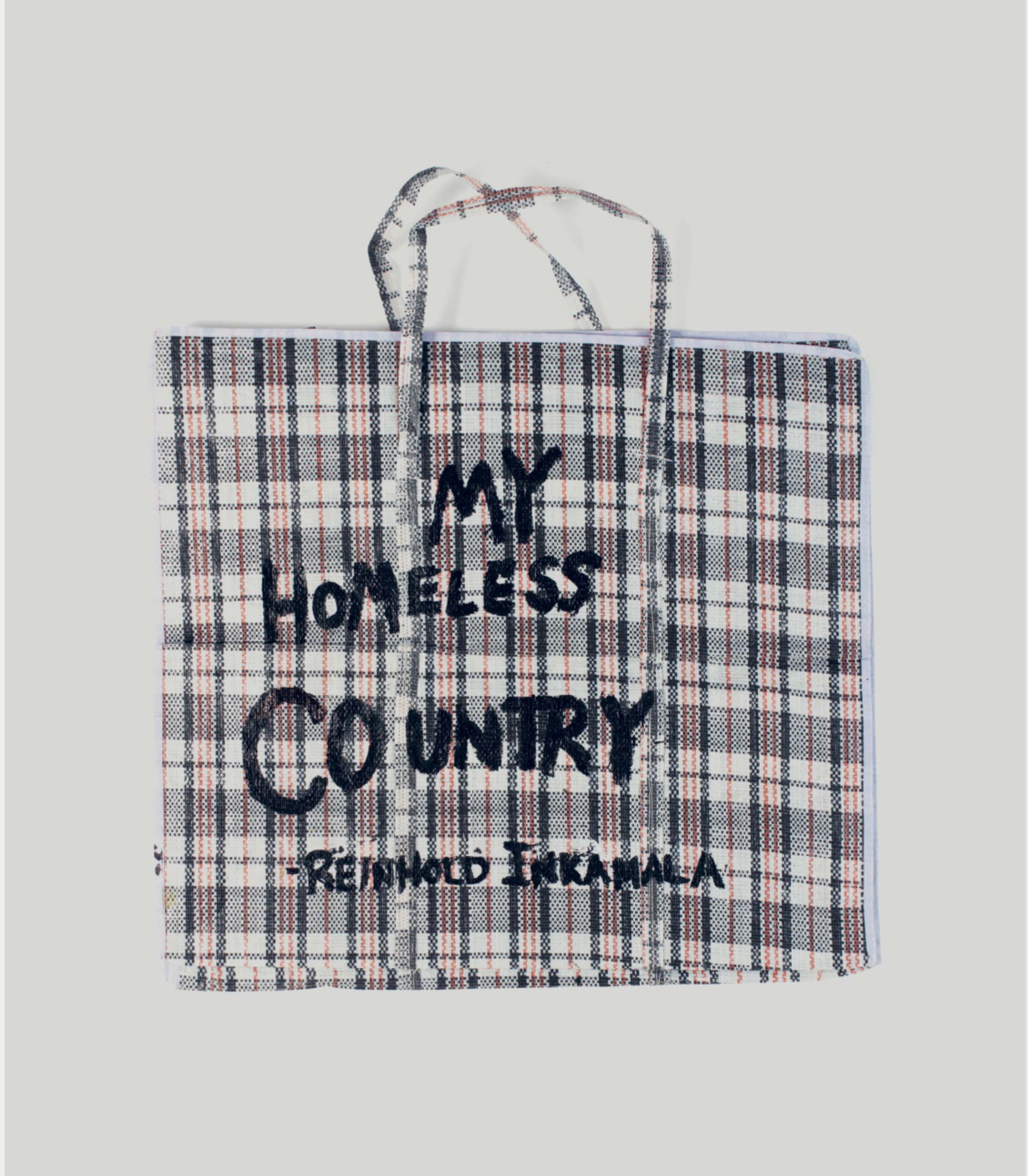
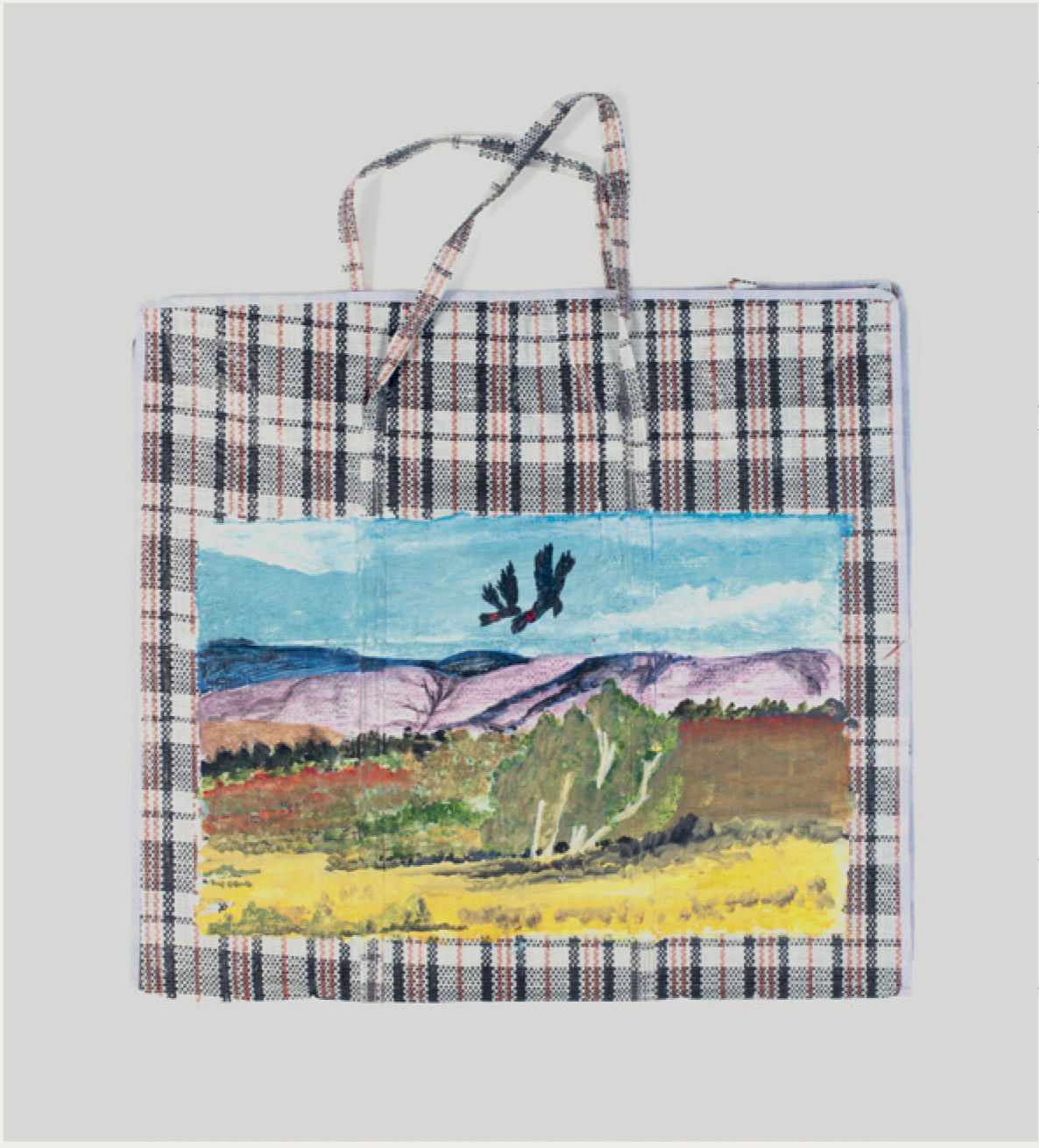
Reinhold Inkamala, My homeless country, 2019, acrylic and marker pen on nylon stripe bag, 56 x 64.5 cm.
1. Front Cover

The eastern part of Australiabecame a colony of England and partof the British Empire in 1770, whenLieutenant James Cook declared ita British possession at PossessionIsland in the Torres Strait Islands.It was Eddie Koiki Mabo from Mer(Murray Island) in Torres Strait who, over 200 years later, in 1982, challenged thearrogance of this imperialist declaration and the legal fiction on which it was based,winning the Mabo native title claim over Mer before the High Court of Australia.The legal fiction of the doctrine of terra nullius – the Latin legal term for ‘emptyland belonging to no-one’ and, more particularly, ungoverned – based on WilliamBlackstone’s 1765 theory of ceded colonies, held sway for those two centuries. On26 January 1788 the colony of New South Wales was established, and thereafterother parts of Australia were declared colonies, eventually totalling six in all.Aboriginal societies and their territories were overrun by settlers, and in manyparts of the continent and its islands, if they survived at all, they did so in muchreduced and horrible circumstances.

The British invasion and colonisation destroyed much of Indigenoussociety, but enough remained for people to demand recognition of their humanity,their rights and their sovereignty. These demands began soon after first contactand continue to this day. Yet, Australian law doctrine maintains that despite theestablishment of Indigenous societies governing every place on this continent andits islands across more than sixty millennia, sovereignty cannot be recognised.What is refused is the idea of Indigenous sovereignty, a claim made by Aboriginalpeople in legal cases, petitions, literature and art. It was summarily dismissedby Anthony Mason’s High Court decision in 1979 in Coe v Commonwealth:‘The contention that there is in Australia an aboriginal [sic] nation exercisingsovereignty, even of a limited kind, is quite impossible in law to maintain.’3 Thereis much to be said about the injustice of this decision and the absence of historicaland factual understanding of the ways in which Aboriginal people have governedand continue to govern their societies and territories. As Noel Pearson has argued,‘a concept of sovereignty inhered in Aboriginal groups prior to European invasioninsofar as people have concepts of having laws, land and institutions withoutinterference from outside of their society.’4

1. Front Cover

In Australia, the denial at law of Indigenous sovereignty and, indeed, thevery existence of Aboriginal polities, has a peculiar history. Here, the doctrineof terra nullius was applied to justify colonisation. It was the 19th century viewthat we were arrested in an evolutionary cul de sac, a tragedy of geographicaland spiritual isolation. And for many 19th century Europeans, the collapse ofAboriginal society in the wake of European colonial settlement was seen to reflectthe static nature and natural inferiority of the Aboriginal ‘race’ – rather than theresult of deliberate war, dispossession and genocide.With native title recognised by the High Court of Australia in 1992 inMabo (No 2), the issue of all other Aboriginal laws, and the idea of Aboriginal

and Torres Strait Islander sovereignty,became a live issue. How can it beexplained that native title to land thatpre-existed the narrow western ideaof sovereignty and survived it, as theHigh Court of Australia acknowledged,has been recognised, and yet the fullbody of ancestral Indigenous laws andjurisdiction are deemed by this narrow, historically distorted notion of sovereigntyto be incapable of recognition?

First, what is the notion of Indigenous sovereignty? One way to explain itis by seeing signs of it in works of art. Indigenous art plays a key role in the processof achieving recognition of Indigenous sovereignty. It provides the visual andsymbolic flesh to the dry legal bones.There is an inescapable theme

There is an inescapable theme running through much of Aboriginal andTorres Strait Islander art: homelands. They may be venerated or mourned: whetherintact and governed by traditional owners or stolen and destroyed, they remainenlivened by ancestral narratives about long-past events that saw us createdalong with other species and the earthly, watery and celestial forms in the worldaround us.

1. Front Cover

An exampleis Ngurrara Canvas II(1997). Measuring 8 by10 metres, the canvas isa vivid map of Ngurraracountry, painted bytraditional owners on thebanks of Lake Pirnini inthe Kimberley region in1997 and presented asevidence in the Ngurraranative title claim, lodgedin 1996. The canvas hasbeen exhibited awayfrom its country at theNational Museum of Australia and the South Australian Museum,5 and upon itssecond return to Lake Pirnini the traditional owners conducted a ceremony to‘Parnkimanu Ngurrara’ to awaken the canvas back out on Ngurrara country. Thepainting has power; the power of the ancestors and the living:

[the painting] illustrates the significant jila (springs)and jumu (soaks) across Ngurrara country, with the onlyconcession to Western mapping a depiction of the CanningStock Route. Ten years after the canvas was painted,Ngurrara were granted exclusive possession native title overapproximately 77,595 square kilometres — an area largerthan Tasmania.6

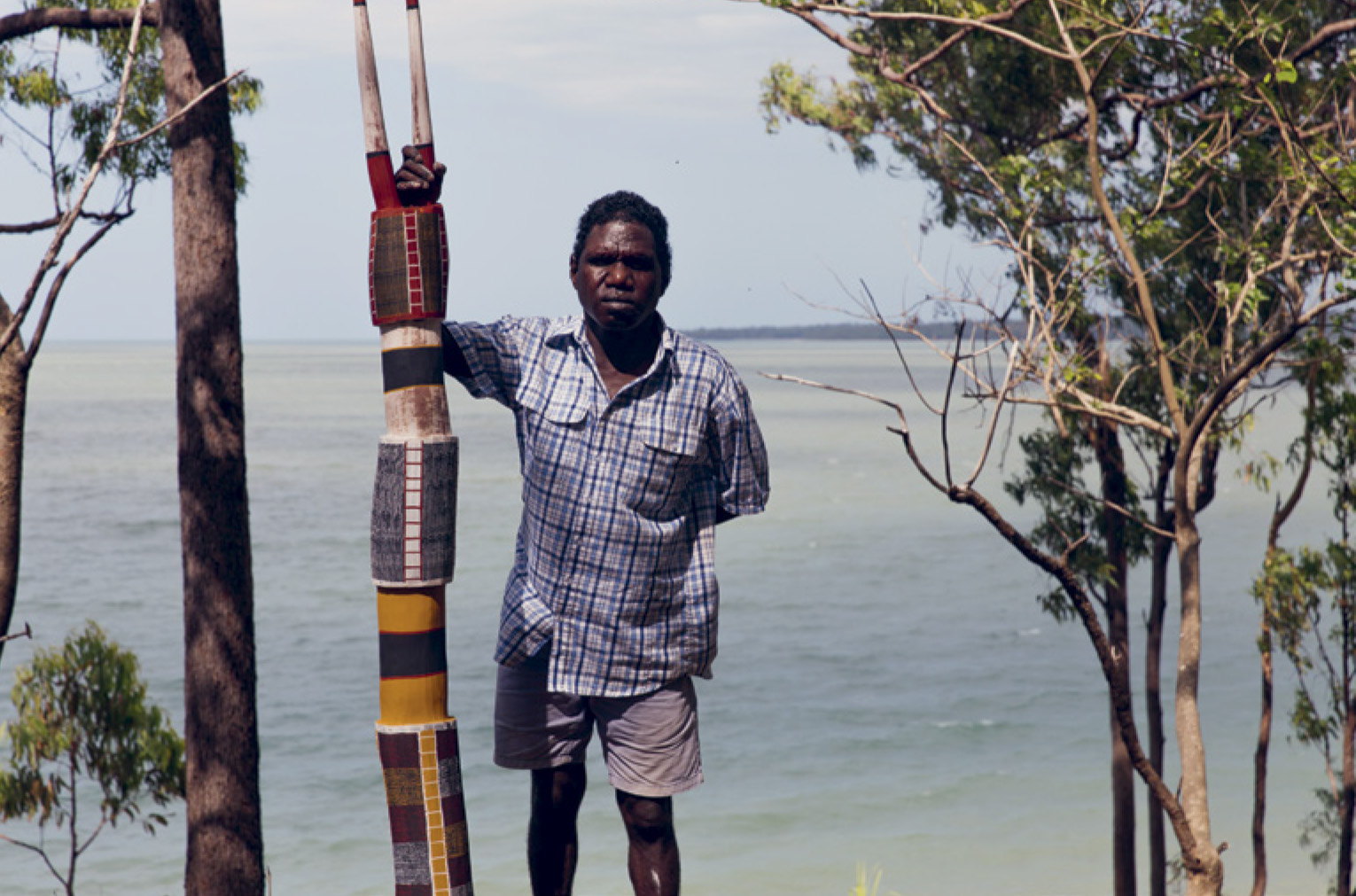
Pedro Wonaeamirri, Tutini, 2019, natural ochres on ironwood. Photograph: Will Heathcote. Courtesy the artist, Jilamara Arts and Marcia Langton 66 Craft and Alcaston Gallery, Melbourne. Copyright © Pedro Wonaeamirri.
1. Front Cover

In contrast to the colonial artof Australia – such as FrederickMcCubbin’s A bush burial (1890),which is included in the 22nd Biennaleof Sydney (2020), titled NIRIN –and a great deal of postcolonial art,Ngurrara Canvas II, and others like it,tells the story of the country from theperspective of its traditional owners,who have inherited its great power. This is not ‘political art’, this is not merelya statement subverting the colonial conquest narrative but, rather, a statementof Indigenous sovereigntysourced in the ancient storiesand genealogies, the songlinesand sacred narratives andplaces that are the livingrecord of the people. This istheir ‘truth-telling’, similarlyrepresented in the powerfulPitjantjatjara artworks ofKunmanara Mumu MikeWilliams and Sammy Dodd,which asserts their historical reality so long denied and distorted.

Understanding Sovereignty as the Spiritual or Ancestral Tie of Aboriginal People to Their Lands

It seems to me that the concept of sovereignty as developed in the western legaltradition to describe nation states is artificial when applied to the Aboriginalrelationship to land that is at the core of Indigenous systems.

Frederick McCubbin, A bush burial, 1890, oil on canvas.
1. Front Cover

A more appropriateconcept is reflected in the judgment of Judge Fouad Ammoun of the InternationalCourt of Justice in 1975 in the Western Sahara Case.7 Bayona-Ba-Meya dismissedthe materialistic concept of terra nullius, which led to the dismemberment ofAfrica following the Berlin Conference of 1885. Bayona-Ba-Meya substitutesfor this a spiritual notion, the ancestral tie between the land, or ‘mother nature’,and the man who was born therefrom, remains attached thereto, and must oneday return thither to be united with his ancestors. This link is the basis of theownership of the soil, or better, of sovereignty.8

those of us who can claim a kind of sovereignty that pre-dates the coloniststo have a sense of place that is at once deeply emotional and social and political.Bayona-Ba-Meya’s concept is cited explicitly in the Uluru Statement from theHeart, issued as a result of an historic gathering of over 250 Aboriginal and TorresStrait Islander people at the National Indigenous Constitutional Convention

in 2017, and which called for the‘establishment of a First Nations Voiceenshrined in the Constitution.’9The coexistence of ancientand pre-existing Aboriginal politiesor nations within the Australian state,and the ethical basis for their futurerecognition by formal constitutionalor legislative means, is a matter that isclose to the hearts of most Aboriginaland Torres Strait Islander people.Sovereignty, as I see it, is the legalpersonality of the Aboriginal polity –and that social complex that is sometimes called sovereignty should be recognised.But how is the question. The post-settlement history of Australia has made this adifficult problem, and so too the refusal of politicians to advocate for this issue.10

1. Front Cover

Internationally, the United Nations Declaration on the Rights ofIndigenous Peoples makes no reference to sovereignty, but Article 3 states that‘Indigenous peoples have the right of self-determination. By virtue of that rightthey freely determine their political status and freely pursue their economic, socialand cultural development.’11 This right may be interpreted as constituting a rightto maintain a form of sovereignty. In a similar vein, Noel Pearson has argued that‘local indigenous sovereignty could exist internally within a nation-state, providedthat the fullest rights of self-determination are accorded.’12 But it is preciselyhere that we have the problem. The Australian state has consistently failed tounderstand and to accept that the rights of its Indigenous peoples should be thefullest rights of self-determination.

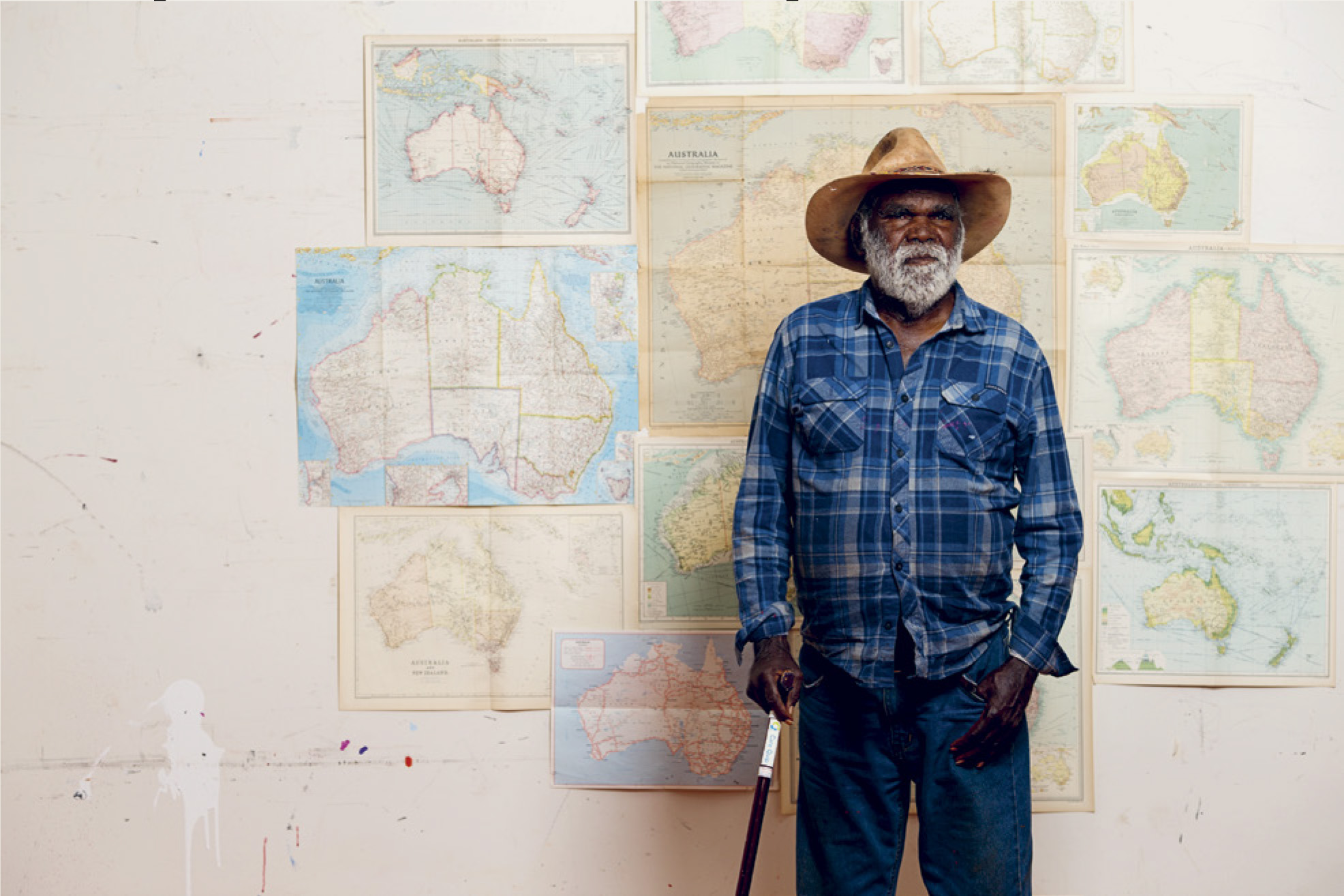
Kunmanara Mumu Mike Williams at Mimili Maku Arts. Photograph: Marcia Langton 68 Rhett Hammerton. Courtesy the artist and Mimili Maku Arts.
1. Front Cover

Moreover, becausesovereignty is conventionally viewedas absolute power, it can be difficult toadvocate for. As Brennan, Gunn andWilliams argue, sovereignty ‘is a loadedterm precisely because it deals withultimate authority and its use is oftenwedded to a strong rhetorical purpose.By using a concept borrowed fromwestern legal and political thought,Indigenous advocates run the risk oftheir opponents selecting the mostpolitically damaging interpretationavailable, to invalidate all competinginterpretations. All the nuance can belost.’13 The classical or ‘formal’ idea ofsovereignty views it as indivisible andabsolute, and yet this concept has beenthe subject of much legal and theoretical debate.A more modern and nuanced understanding of sovereignty defines it byreference to a dichotomy between ‘internal’ and ‘external’ forms. The externaldimension defines the status of a people in relation to another people, state orempire, whereas

the internal dimension concerns the relationship between a people and‘its own’ state or government.14 According to this theory, the right ofself-determination is held by peoples, but determining their political status andeconomic, social and cultural developmenttypically involves the structure and behaviourof states and their institutions.15Classical notions of sovereigntyimagine Indigenous claims to sovereignty asdemands for secession from the Australianstate, or at least as rejecting the mainstreamrule of law.

Karla Dickens, Hard-hitting brother I, 2019, inkjet print, 120 × 80 cm, edition 8, 180 × 120 cm, edition 3. Courtesy the artist andAndrew Baker Art Dealer, Brisbane.
1. Front Cover

concept shifts from the dominant “statesovereignty” construct and comes toreflect more of the sense embodiedin western notions such as personalsovereignty or popular sovereignty, itwill remain problematic if integratedwithin Indigenous political struggles.’17

Formal
Recognition
of Indigenous Sovereignty

implicit in the nature of a treaty is recognition of
anothersovereignty, a nation within
Australia.Constitutional legal scholar
Cheryl Saunders18There are two key legal mechanisms by which Indigenous people seek to havetheir sovereignty recognised by the Australian state. The first is by amendingthe constitution to create a space for First Nations within the structural legalarrangements of the nation. The second is through modern treaties that woulddetail and define how those arrangements would operate at the ground levelbetween specific groups of Indigenous people and state actors
The project of constitutional reform that has been pursued by Indigenouspeople since at least the 1930s has two main aims. First, the aim of removing racismin the Australian constitution and creating a symbolic space for Indigenous peoplewithin the modern nation-state. Second, enacting substantive constitutional reformto enshrine an Indigenous voice to parliament. The latter, if done effectively, wouldovercome the extreme minority status of Indigenous people within our democracyand recognise the sovereign status of Indigenous nations.
The question of how to bring about a constitutional amendment inAustralia is another issue that remains hotly debated by Indigenous leaders. Toachieve the level of community support needed to pass such an amendment at areferendum would require bipartisan political support, which in turn would entail theneed to secure support from electorates in rural, conservative and regional Australia.

1. Front Cover

It is clear that, by itself, the ‘battle of ideas’ will not have the politicalforce required to bring either constitutional change or a treaty process to fruition.Nor would a moral victory lay the ground for strategic alliances and an ongoing,mutually beneficial relationship between the treating parties.

My research with Maureen Tehan and Lisa Palmer has shown that, sincethe first agreements were signed under the provisions of the Aboriginal LandRights Act (1976) in the Northern Territory more than twenty years ago, there hasbeen an astonishing proliferation of agreements between Australian Indigenouspeople and various corporations and branches of government.

These agreementshave been aimed at achieving sustainable relationships and outcomes, whetherthe matter concerns a social license to operate a mining company or for thegovernment to deliver a service.

Elle Máijá Tailfeathers, Bihtt.oš, 2014 (video still). Commissioned by the imagineNATIVE Film and Media Arts Festival. Courtesy the Marcia Langton 72 artist. Copyright © Violator Films
1. Front Cover

While the many attempts attreating with Aborigines in colonialtimes and in the early 20th century didnot translate into enduring outcomes, itis clear that the agreements negotiatedsince the 1970s are evidence of awillingness to do what the colonial settlers were unable to countenance. That is, toacknowledge that another group of people were the owners and custodians of thelands and waters of Australia;that their descendants have aright to possess, use and enjoythose lands and waters; thatthose descendants have a rightto govern, within the limitsof Australian law, their useand access by others; and thatthey have a right to reap anybenefits arising from that useand access by others, as wouldany other group of people inrightful possession of a place.These practical agreements settled between Indigenous and nonIndigenous parties, mostly for land use reasons, number in the many hundreds –there are possibly two thousand now – and they demonstrate that coexistence canbe achieved by formal means, such as Indigenous Land Use Agreements.

Noel Pearson puts it this way:There is surely no future in hoping the nation-states will furtherfragment, so that more nations can be created which reflect theexistential convictions of distinct peoples. The existing nationstates, jealously guarding their integrity, have no appetite forfurther fragmentation.… But it is also surely clear that nation-states denyingthe existence of distinct peoples within their territories andinsisting upon the integrity of the unitary state, withoutrecognition of distinct peoples and cultures, is no solutioneither. Insisting on comprehensive assimilation as theconcomitant of nationalism is not the recipe for unitywithin nations; it foments too much ethnic destruction andresistance.19

There is an alternative to fragmentation and the assimilatory state. It isrecognition and reconciliation: where peoples within nation-states come to termswith each other and commit to the nation, while respecting the existential anxietiesof distinct peoples.20

1. Front Cover

Understanding the cultural foundations of the Indigenous world is notdifficult. The first peoples of Australia have a right to exist and be acknowledged and this is the

the outstanding challengethat Australians must eventually face.

The unfinished business

of Australia’s nationhood includes this outstanding problem of recognising theancient jurisdictions of Aboriginal law, and that requires recognition of theirpolities as nations. There are several options for doing so, including a constitutionalamendment to provide such polities with the necessary status to treat withAustralian governments, private corporations and other entities for the purposesof governance and industry.

In the Australian context, it follows that outdated and unjust theories ofrace must be replaced by a recognition of the ancient jurisdictions and continuingpolity of Aboriginal nations. This must be the full meaning of Aboriginalsovereignty and this is what any future treaties with Aboriginal and Torres StraitIslander people must recognise.

First Nations people’s sovereignty needs to be formally recognised withinAustralia’s political and legal structures. It must also be recognised popularlywithin our social structures – what some refer to as mere ‘symbolism’, but whatI believe is a key element of the project. These forms of recognition are not asseparate as they might seem but are, in fact, intricately connected.

Recognition of Indigenous Sovereignty through ConstitutionalReform and Treaty-Like Agreements

The moral legitimacy of Australia as a modern state will remain at issue whilean honourable place for Indigenous Australians in the formal constitution of thenation remains unresolved. That place – one that accords the first peoples theirrightful status as the original peoples and acknowledges the need for restitution ofwhat was taken from them – must be found beyond the limits of legal frameworks.The political settlement of these issues is well overdue.I leave the last word to Henry Reynolds, who drew our attention to theabsurdity of the claim to absolute sovereignty by the High Court of Australia andby the Australian state:

1. Front Cover

But ultimately the Crown will be required to establish howand when Aboriginal sovereignty was overridden. It willnot be enough to assert that at the moment of annexationit disappeared in the blink of an eye over vast areas andamong people who, in some cases, did not even see theirfirst Europeans for many years. To advance such fancifulpropositions would invite ridicule and ill serve the intellectualreputation of the judiciary.21

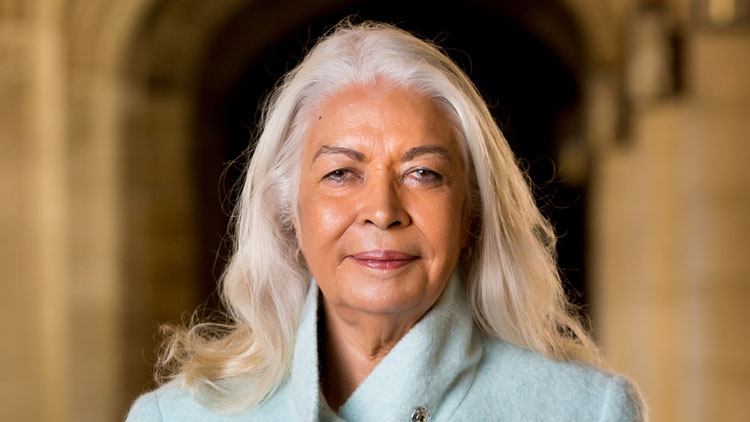
Professor Marcia Langton AM is the Foundation Chair of Australian IndigenousStudies at the University of Melbourne, where she is also the University’s firstAssociate Provost.

Photo: Marcia Langton
1. Front Cover
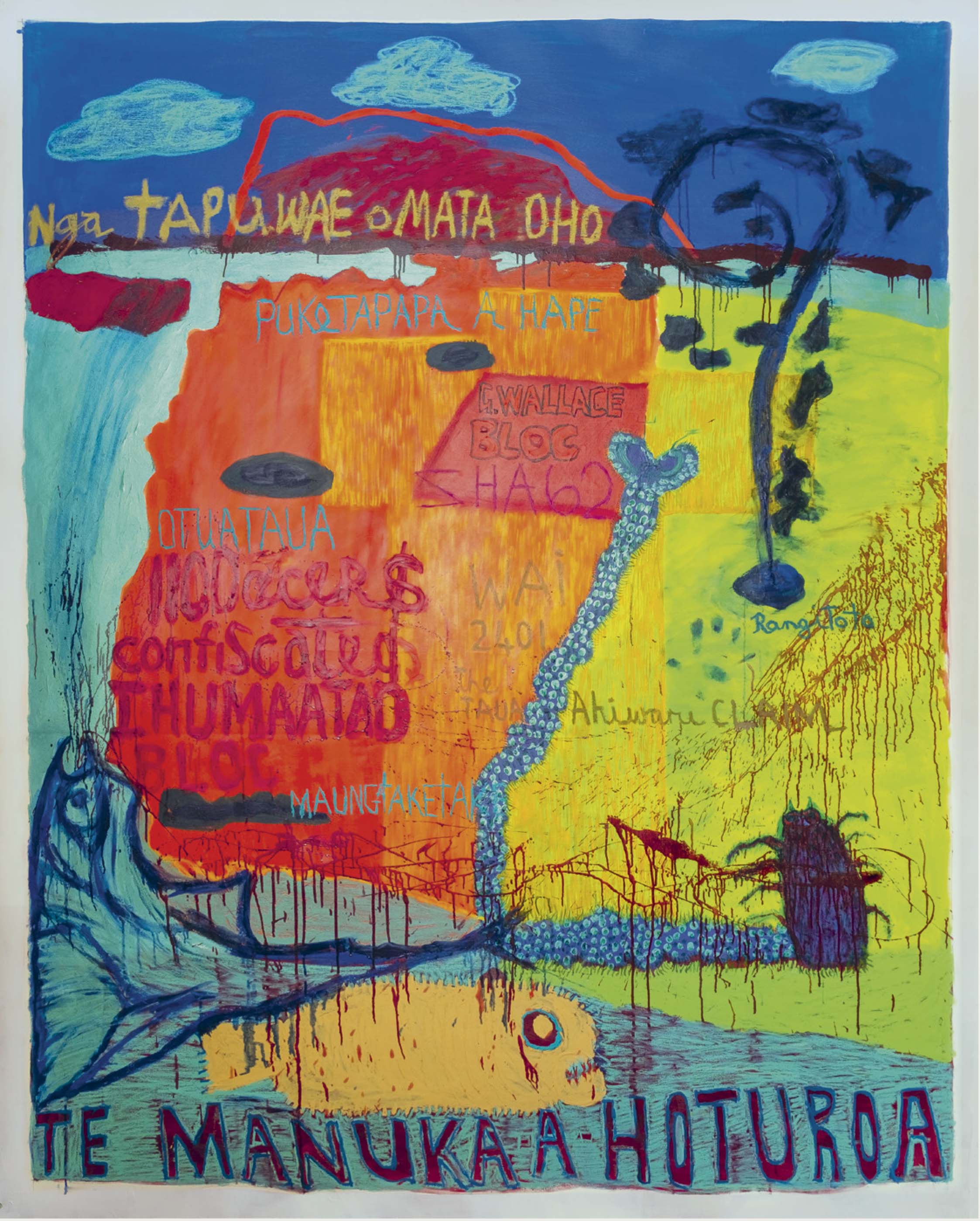
Emily Karaka, Nga Tapuwae o Mataoho, 2020, mixed media on canvas, 212 x 170 cm

Megan Tamati-Quennell

1. Front Cover

Symbiotic
Relationships
Dhaagun:
Sovereignty and
WorkingTogether

To be earthed means to be grounded,to be sure of yourself, to be solid, tohave confidence in your decisions andto trust yourself. Māori ontologicalrelationships with whenua– the Māori concept of earth/land, which alsomeans placenta or afterbirth – like many First Nations cultures, is a groundedrelationship both culturally and spiritually. It conveys fundamental beliefs aboutthe nature of reality and the symbiotic relationship between humans and the land.Even in the abstract, in the most tapu (sacred) of all our creation genealogies, thefoundation from which all our whakapapa derives (whakapapa being the layeredand complex Māori knowledge system that binds all things), land is presentedas something we belong to, are made of, come from and return to. At theculmination of one key Māori creation genealogy or whakapapa, the earth/land/whenua is personified as the primal Mother. The concept of our original parentsRangi-nui and Papa-tū-ā-nuku, sky father and earth mother, gives voice to ourenmeshed relationship.

Dhaagun, the Wiradjuri word used as one of the seven themes of NIRIN,the 22nd Biennale of Sydney (2020), similarly speaks of earth/land/whenua andof the interconnection between land and people. In English, dhaagun can betranslated as ashes, earth, dirt, soil or land, but it also can be understood as areference to a grave.1 An anchoring concept for NIRIN, the power of dhaagun is inthe significance of its dual meanings and the holistic relationship, from a Wiradjuriperspective, it elucidates. Dhaagun makes clear in its associations, as expressedthrough its English translation, that earth/land/whenua is both something that

1. Front Cover

people are sustained by and which weinevitably return to in our death.Sovereignty in an Indigenoussense is similarly connected to earth/land/whenua. The word sovereignty, appropriated from the English language,became ‘a critical source of self-determination for Indigenous peoples globally,’2and has been used as a corrective strategy by First Nations people to counterthe ongoing dispossession of our lands and resources by successive settler-nationgovernments since our colonisation. Colonisation in Australia was founded onthe false pretext of terra nullius, land that was legally deemed by western lawto be unoccupied and uninhabited. The colonisation of Australia is described byAboriginal people – the mana whenua or first peoples of Australia – as invasion.

In a Māori context, the term tino rangatiratanga can be defined asabsolute sovereignty.Tino rangatiratanga was used in the 1840 Te Tiriti o Waitangi, thefounding document of New Zealand, with the promise from the Crown thattino rangatiratanga would be guaranteed for Māori people.

Elle Máijá Tailfeathers, Bihtt.oš, 2014 (video still). Commissioned by the imagineNATIVE Film and Media Arts Festival. Courtesy the Marcia Langton 72 artist. Copyright © Violator Films
1. Front Cover

Rangatiratangameans chieftainship and can be translated in English as responsibility, authorityor sovereignty. Tino is an intensive word and means full, total or absolute. Socombined, tino rangatiratanga means complete responsibility, absolute sovereignty,full authority or control (see John Miller and Elisapeta Heta on p. 180 of thiscatalogue). In the English translation of the Māori version of Te Tiriti o Waitangi,the British Queen agreed to the rangatira and the iwi (chiefs and people)maintaining full tino rangatiratanga of all our lands, kāinga (villages) and taonga(anything prized), including our ways of life. In the Māori version of the Te Tiritio Waitangi treaty, tino rangatiratanga was defined as a fixed term, and as theexpression of absolute Māori authority and autonomy over all things Māori.

Within the treaty, what was agreed by Māoriwas not sovereignty but kāwanatanga.Kāwanatanga can be interpretedas governorship, with governorshipgranted by Māori to the Crown as‘limited power to control new settlers.’3Te Tiriti o Waitangi did not makeMāori people into British subjects;instead it recognised our continuedrights to experience and practice ourown customs and lifestyles, and topossess our own laws.

In her seminal book MaoriSovereignty (1984), Donna Awateredefines Māori sovereignty as: ‘Māoriability to determine our own destinyand to do so from the basis of our landand fisheries’4 (see Emily Karaka on p.150 of this catalogue). Native American academic Jolene Rickard believes powerand authority in relationship to sovereignty are synonymous, with sovereignty atool that could be used to ‘perpetuate the existence of a group.’5 Sovereignty in aFirst Nations context, Rickard states, is part of an ongoing strategy for our survivaland is ‘… the border that shifts indigenous experience from a victimized stanceto a strategic one.’ The recognition of sovereignty, she adds, ‘… puts brains in ourheads, and muscle on our bones.’6 Rickard also calls for First Nations artists to beunderstood ‘through the clarifying lens of sovereignty and self-determination … ’7rather than being identified and defined in relation to assimilation, colonisationand identity politics.

1. Front Cover

During the 2019 curatorial symposium ‘It’s as if we were made for eachother’, held at St Paul St Gallery in Auckland and convened by Taarati Taiaroaand Balamohan Shingade, a conversation took place between the two Aucklandbased academics Te Kawehau Hoskins and Alison Jones about Māori–Pākehārelationships (Pākehā is the name given to settler New Zealanders by Māori). Inhis blog on the conversation, Dan Kelly noted that ‘[t]o be Pākehā is to belong toNew Zealand by virtue of Te Tiriti and the relationship established with Māori.’8The conversation relayed the ‘entangled personal and theoretical trajectories’9of engagement and outlined a way for Māori and Pākehā to work together. Bothspeakers stated that engagement is the crucial pivot, but the desire for answersand finality needs to be set aside and, with that, the engagement is ‘situational,contingent and unpredictable.’10 Their proposal for working together has beenformed from an ‘interminable struggle’ and from a relationship position thatis being ‘made and remade.’11 The tenacity of the return, they said, is what wassignificant, not the engagement alone.

sovereignty or the inter-relationships between Indigenous and settler cultures. Itis being witnessed currently by us all, and overwhelmingly in the form of climatechange. Although some choose to deny it, climate change is the unmitigatedcatastrophe of our age. It relates to the significant and long-term changes to theglobal climate as a result of and related to our – the human – impact on the earth. The connectedness between our activity and climate change makes it clear thatthe world is in crisis and is manifest in what we have come to know as globalwarming, the increasing temperature of the earth’s atmosphere. Its influencescan be seen in the melting of glaciers and the rising sea levels that will eventuallydrown some of our small island countries, including many of our close neighboursin the Pacific.

1. Front Cover
Geoff Kleem, Swan Lake on Fire, 2019, digital photograph.
1. Front Cover

It has altered ecosystems, seen important food species and cropswiped out, and is responsible for the acceleration of natural disasters that we areincreasingly experiencing around the globe. With the biblical intensity of pestilenceand plagues, the natural disasters we are bearing witness to include unprecedentedheatwaves, droughts, floods and cataclysmic environmental crises such as therecent devastating bushfires that have raged across Australia.

The Australian bushfires that escalated during Christmas 2019 and thenew year period of 2020 were of a scale never before seen; the smoke that pollutedand choked the air in Australia created a haze that coloured skies as far afieldas New Zealand and South America. The bushfires have caused, to date, theburning of 14.5 million acres of land in Australia, the heartbreaking destructionof an estimated half a billion native animals and the devastating loss of people’slives. Apocalyptic and terrifying, the bushfires can be seen as a tangible result ofclimate change. This calamitous disaster underlines again the significant symbioticrelationship between us and the earth/land/whenua. The other terrifying missiveit leaves us is the urgency to stop what we are doing and to work together in anattempt to reverse and halt the environmental genocide we have, through ouroblivion, created.

Megan Tamati-Quennell is the curator of Modern & Contemporary Māori& Indigenous Art at Te Papa, Wellington, and Associate Indigenous Curator,Contemporary Art | Kairauhī Taketake Toi Onāianei at the Govett Brewster ArtGallery, New Plymouth. Of Te Āti Awa, Ngāi Tahu and Kāti Māmoe descent,Megan has a 30-year art curatorial career.

1. Front Cover
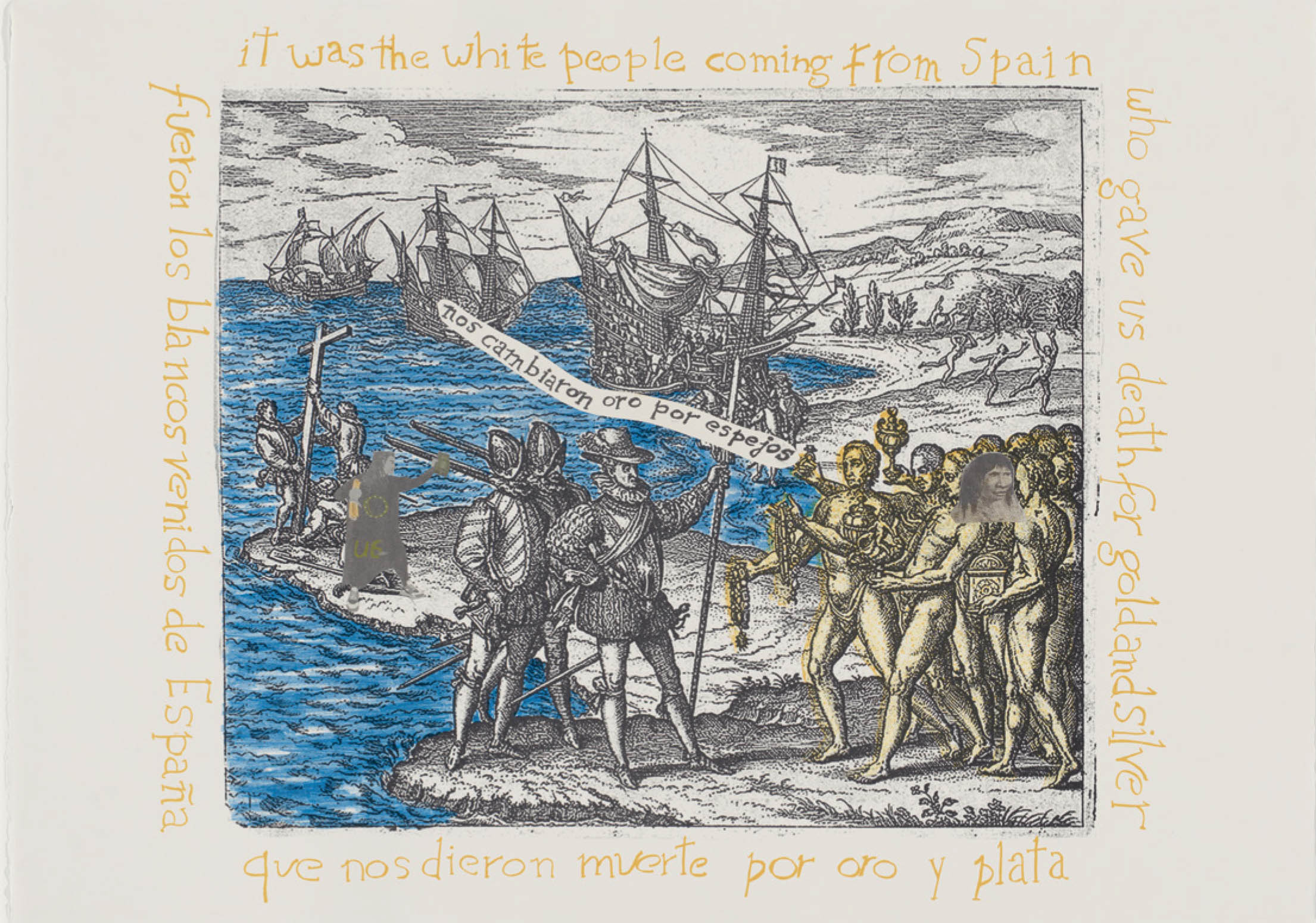
Colectivo Ayllu, It was the white people coming from Spain…, original lithograph. Produced in collaboration with Francisco Godoy Vega 80 Australian Print Workshop.

Francisco Godoy Vega

1. Front Cover

‘I Don’t Understand
You’: The Colonial Reinvention of
White
Supremacy and the Negation of Being Human in the
Colour
Coded System of Mestizo
Identities

When I was a little boy, my fatherwould not cross the landmark ofPlaza Italia uptown. It representedan invisible border in the urban areaof Santiago.1 I, in my aspirationaladolescence during the postdictatorship era,2 just wanted to gouptown past Plaza Italia. Plaza Italiaand above is where the wealthy white Spanish/European colonial descendants live;below that landmark the racialised and impoverished live. In this local examplewe find the world’s foundational racial and economic dividing line reproduced,that which forms the basis of Eurocentric modernity. Martiniquan theorist Frantz

1. Front Cover

Fanon spoke about the abysmalseparation between the areas of beingand non-being as a dividing line.That is, the area of being is inhabitedby white subjects, descendants andinheritors of the colonial project, whilethe area of non-being is inhabited bycolonised subjects, living in a body/territory of oppression but with thepossibility of reinvention throughcritical subjectivities against whitesupremacy. This example of subjectivegeopolitics, as claimed by Fanon inBlack Skin, White Masks (1952), isexactly the one my father felt in hisurban living situation, a reproductionof the separation between areas ofbeing and non-being. This is onecontemporary repercussion of theracial division that began with the birthof the modern/colonial world system in 1492.3With the advent of modernity in the 16th century, European imperialism,especially that particular to Spain and Portugal, sought to establish a division

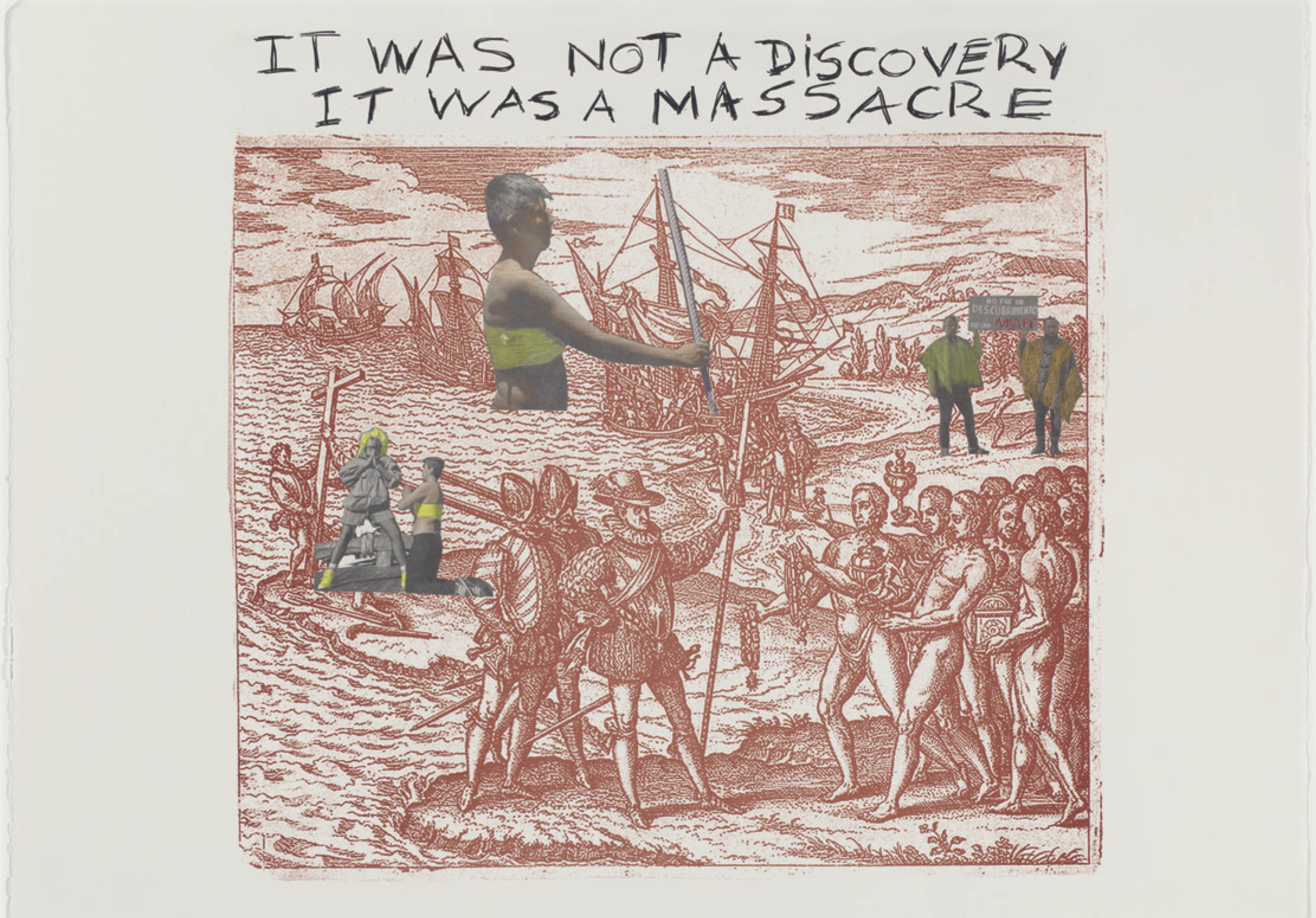
Colectivo Ayllu, It was not a discovery it was a massacre, original lithograph. Produced in collaboration with AustralianPrint Workshop.
1. Front Cover

between white subjects – holdersof reason, beauty, weapons and thecross – and Indigenous and blackpeople, who were to become bodies of exploitation, slavery and even rape, while

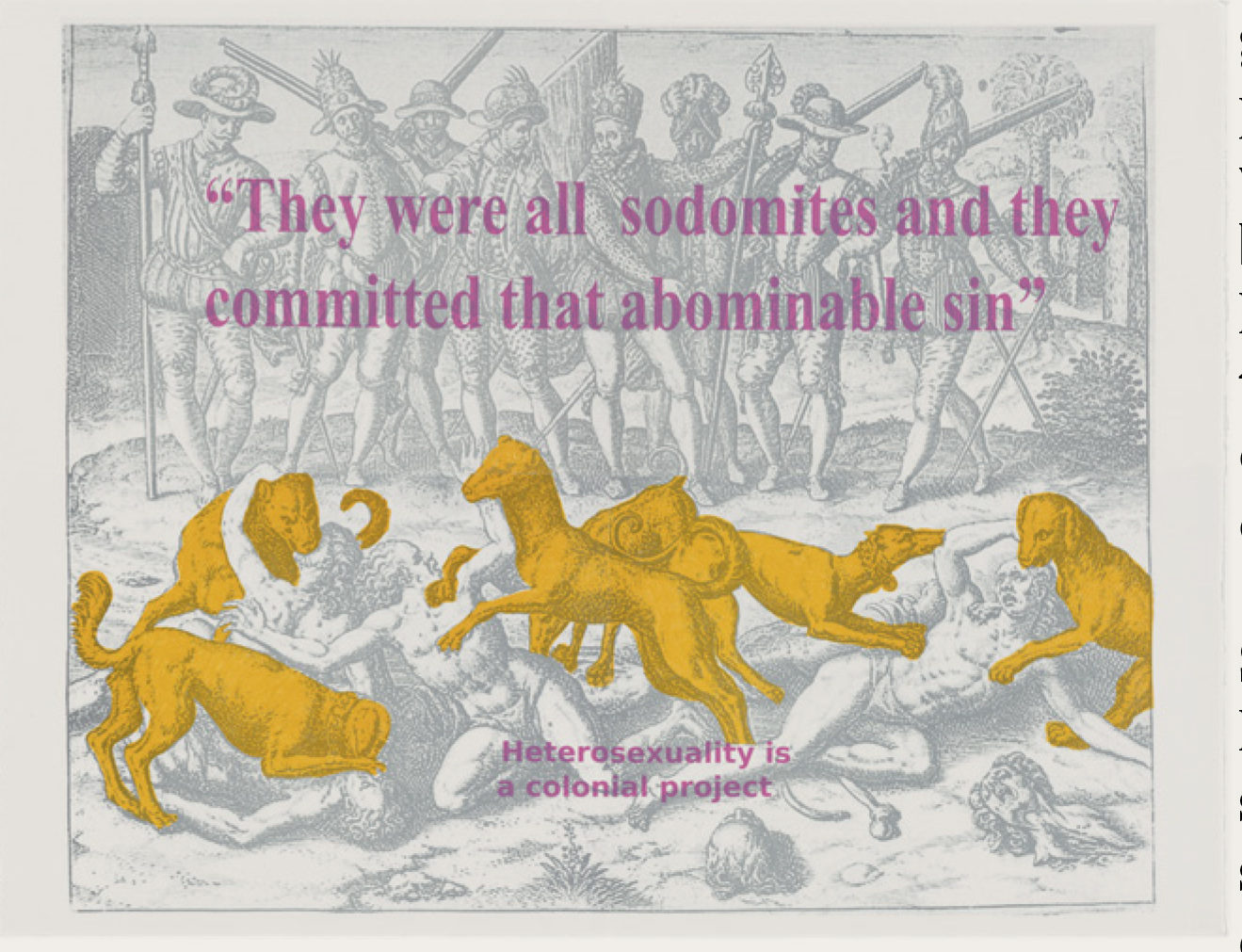
people, who were to become bodies of exploitation, slavery and even rape, whilesimultaneously being constructed as genderless possessions.4 Those racialisedbodies were also subjected to the Euro-white ethical-moral imposition of onewesternised single good – a single goodness, a single beauty and a single truth –based on the Euro-centred authority to rate them, initially, as ‘good savages’ andlater as sodomites, idolaters and drunkards who needed to be indoctrinated. Evenduring his first voyage, Christopher Columbus wrote to the so-called ‘CatholicKing’ Ferdinand II, assigning the character of ‘good savages’ to the Taino people,the Indigenous inhabitants of much of the Carribean: ‘they must be good servants,of good disposition, as I see they are ready to accept everything I said … They didnot have any inconvenience in giving us whatever they possessed … They couldmake great servants … With fifty men we could subjugate them all, and we coulddo with them whatever we may want.’5

We could do with them whatever we may want. This statement byColumbus exemplifies the essence of the modern origin of the hierarchical racialdivision of the world. This is where white supremacy, as an agent of subjugationand and domination of racialised bodies,

is constructed. This white supremacy wouldgo on to be mostly produced bypoor white people from Europewho, through the colonial transit,became a powerful elite. Thiskind of oppression, structuredthrough colour-coded racism,operated from the very beginningof modernity and colonisation.In 1501, the nascentSpanish Empire began thelong history of modern Africanslavery, even as Indigenousslavery in Abya Yala (today’s socalled Latin America)

Karla Dickens, Hard-hitting brother I, 2019, inkjet print, 120 × 80 cm, edition 8, 180 × 120 cm, edition 3. Courtesy the artist andAndrew Baker Art Dealer, Brisbane.
1. Front Cover

was legallyabolished in 1512. After processes of indoctrination and evangelisation to instilbelief in a single God, accompanied by inhuman exploitation, Indigenous subjectswere said to possess a soul. A clear example of the dehumanising exploitation ofIndigenous people can be seen in the Mita system, where the Spanish governmentrequired the Indigenous population of the viceroyalty of Peru to perform periodicforced labour, especially in the mines, constructing a global extractivist system.Meanwhile, Africans were placed at the level of animality and therefore becamesaleable bodies for slavery and extreme subjugation, despite the ‘good treatment’proposed in Le Code Noir, published by King Louis XIV in 1685 in France, or inother legal documents which purported to regulate the trafficking and conditionsof enslaved black people.

The gap between areas of being (white) and non-being (non-white), withtheir various forms of oppression, was consolidated during the colonialisationof Abya Yala, including through the misnomer of mestizo, meaning a personof mixed race. In the 18th century, based on the western need to arrange andcategorise everything (through museums, archives, libraries, hospitals, prisons),Spanish imperialists constructed sixteen racial identities to demarcate peoplebased on colour. According to this colour system, the more whiteness a personpossessed, the greater their access to institutions and resources. This hierarchy ofracial mixture, often depicted in explanatory casta paintings (an artistic systemcreated to show the Spanish monarchy in Europe the racial mixture of thecolonies), included:

1. Front Cover

1. Spanish male with Indian female: mestizo
2. Mestizo with Spanish female: castizo
3. Castizo with Spanish female: Spanish
4. Spanish with Moorish (black female): mulatto
5. Mulatto with Spanish female: morisco
6. Morisco with Spanish female: chinese
7. Chinese with Indian female: jump back
8. Jump back with Mulatto female: wolf
9. Wolf with chinese: gíbaro (jíbaro)
10. Gíbaro (jíbaro) with Mulatto female: albarazado
11. Albarazado with black female: cambujo
12. Cambujo with Indian female: sambaigo (zambaigo)
13. Sambaigo with loba: calpamulato
14. Calpamulato with cambuja: tense in the air
15. Tense in the air with Mulatto female: I don’t understand you
16. I don’t understand you with Indian female: jump back.

1. Español con india: mestizo
2. Mestizo con española: castizo
3. Castizo con española: español
4. Español con mora (negra): mulato
5. Mulato con española: morisco
6. Morisco con española: chino
7. Chino con india: salta atrás
8. Salta atrás con mulata: lobo
9. Lobo con china: gíbaro (jíbaro)
10. Gíbaro (jíbaro) con mulata: albarazado
11. Albarazado con negra: cambujo
12. Cambujo con india: sambaigo (zambaigo)
13. Sambaigo con loba: calpamulato
14. Calpamulato con cambuja: tente en el aire
15. Tente en el aire con mulata: no te entiendo
16. No te entiendo con india: torna atrás.

1. Front Cover

These classifications of ‘racialcrossings’ often animalised nonsubjects by using terms such as lobo(wolf) or mulatto – derived from themule, a hybrid and sterile animal – whowere further dehumanised throughterms such as torna atrás (jump back)or no te entiendo (I don’t understandyou), the latter signalling a kind oftotalising incomprehensibility in theimagination of its white creators. TheSpanish-Catholic ethic necessity toclassify everything and everyone, evensubjects that seemed to evade theirreductive system, served to reinforcethe racial pyramid of power. Thiscolour-coded table of ‘racial crossings’was interlinked with a system wherethe darker a person’s complexion,the less western features they had,the greater the oppression they hadto suffer at the hands of white supremacy. It is no coincidence that many popularSpanish proverbs and sayings are explicitly racist, for example: aunque la monase vista de seda, mona se queda (even if a monkey dressed in silks, she would stillbe a monkey) or hacer el indio (to play an Indian). The first expression refers toa person of colour who may wear dress and makeup to look white but will neverbe white, while the expression hacer el indio came to signify an action that wasinappropriate or comical.

These popular expressions have a long memory. In 1868 the Mayor ofSantiago, Benjamín Vicuña-Mackenna, in the wake of the European biologicalracism that began with 19th century New Imperialism in Africa,6 stated: ‘An Indian isnothing but an indomitable brute, an enemy of civilization as he only rejoices in thevices in which he is submerged: laziness, drunkenness, deceit, treason and all thoseabominations which make up a savage life.’7 An Indian was something non-rational,non-functioning, non-human. Being and playing the Indian would imply dwelling ina space of error and ineptitude, as signified by the popular expression used in Spainand its ex colonies – nos cambiaron oro por espejos (they gave us gold in exchangefor mirrors) – which supposedly refers to Indian economic blindness. In the whiteimagination, Indian racial inferiority was deeply entrenched.This racial hierarchical division of the world acted as

the structuralfoundation for the creation of the capitalist system that was to appear – before theIndustrial Revolution – in marketing enslaved people through the extraction ofraw materials in Abya Yala.8 European liberalism and so-called democratic politicsbecame a smoke screen to conceal the ongoing preservation and maintenance ofracial hierarchies within nation-states. The tentacles of this system spread not only

1. Front Cover

throughout institutions and the peoplethat manage them, but also throughthe normal business of everyday life.This racial division evenoperates in the politics of desire, in theimposition of a heterosexual familyproject as the only permissible familyunit, under what Sharon PatriciaHolland calls ‘the erotic life of racism.’9This is evident in the unconsciousinternal inscription of the archetypal western love narrative: the imposed dreamof a prince charming and pink princess (both white) as the ideal figures in thecreation of families, ruling society and the ‘improvement’ of race, in contrast to theerotic exoticisation of non-white subjects, rendered as purely sexual, non-romanticbodies. As stated by Fanon: ‘When I am loved, I am told that it is despite my color.When I am hated, it is added that it is not because of my color … Here or there, Iam a prisoner of a hellish circle.’10

That body of error, or the erring body, is corporally conscious of theracial division of the world. Crossing Plaza Italia in Santiago meant becoming anindividual integrated into a system that will never entirely accept it.

A racialisedbody that bears an unrequited love of whiteness. To use Fanon’s phrase, a darkskinned or brown body in a white mask trying to look like the master, but neverachieving it. Dwelling within the master’s house and speaking the master’slanguage is only made possible by acknowledging that abysmal division betweenthe worlds of white supremacy with its historical privilege, and the wretched of theearth with their long memories and resistance strategies. ‘I don’t understand you’,one of the last on the list of ‘racial mixtures’, reflects a basic tenet of Eurocentriccolonisation: white supremacy doesn’t want to understand other subjectivities,knowledge and ways of living beyond the individualistic and anthropocentricmodern project. The start line of racist violence cyclically begins again, and theinfected colonial wound is still open, as is the request for its healing.

Francisco Godoy Vega has a PhD in Art History and Visual Culture (2016). He isa member of Colectivo Ayllu, a curator, a poet and an anti-racist/sexual dissidentactivist based in Madrid.

1. Front Cover

EVERDAY
FRUSTRATIONS

After receiving Francisco Godoy Vega’s essay, Francisco and Brook Andrew,through mobile messaging between Madrid and Sydney, reflected on thedilemmas of speaking freely with one’s own terminologies, about one’s ownexperience, in a world where, for many, the people are invisible. Brook andFrancisco talked about the everyday frustrations experienced in navigating theexpectations of the dominant cultures, and the persistence of colonial racistthought regardless of where one lives, knowing that the Global South is aconstruct and mirrors the complete world.

Hi Brook. How are you? Where are you? Where are youstaying with these settlers? Please let me know.I find it uncomfortable, sometimes, questions ofvalidity towards my ideas in writing. For example, whenwhite people ask me ‘Can you explain to me what isbiological racism?’ or things like that. Then it’s like, maybeif you don’t know it, it’s not … I don’t know how to explainit but sometimes there are questions that are not believingin your ideas, like when I talk about long memory or thatinstitutions are full of white people in general. They’recertain things that are kind of weird to explain to somebodyyou don’t know, and somebody that is white.I’m looking forward to reading your text. That’s it, mate,bye bye.

Hey there. Yeah, well I think it’s up to you, how you wantto disseminate your own ideas. I come across this allthe time, and I know that you and I, and our friends andfamily and colleagues, have the same issues across theworld regardless if we are Ainu, Sámi, Inuit, Mapuche orWiradjuri. We’re constantly defining our own lives andthen putting that into terminology for the Academy andsometimes people don’t actually know what it means – it

1. Front Cover

goes against an entire historical strategy of racialisationand definition.So, I think that when it comes to writing aboutbiological racism, if you want, put a footnote. But when itcomes to, institutes are full of white people, I certainly don’twant to soften it, but it’s complicated. Even for me today,many Indigenous people may look white and I understandwhat you’re saying, because whiteness and blacknessis not always about skin colour because those divisionsover history are much more complicated and are deep andinsidious within the psyche and trajectory of power – eventhe term ‘decolonial’ is not for me, and many others, anaction that supports us, however Sovereignty does. So,there’s this segregation of us from the outside world.Interestingly, when I was young my Wiradjurigrandmother said to me, ‘Hey Brook, I’m proud of you foryour Aboriginal politics, but you’re also white.’ Because shehad to remind me of that, as her Scottish father lived on themission and fringe camps too with them until her motherdied in child birth but then he disappeared – it’s complicated.She didn’t see our family based on colour; she saw us basedon culture, like many of us around the world we are heldtight through Indigenous kinship, a different order in life. Isuppose what she was trying to say to me, in that context,because both my mother’s parents are Aboriginal, but herfather was white, I think that she just wanted to honour himtoo, the same as I honour my Celtic/Jewish father.I know what you mean, though, because institutionsare full of people who are reduced down to whiteness, asblack people or people of colour are reduced to blacknessregardless of what we look like, we are culturally different.I think maybe that’s it. There’s no clear cut and dry divisionas the history and legacy of racism wants it to be but itstill forms us, like terms of ‘half-caste’ and ‘quarter-caste’still define me here in Australia – definitions still left overfrom the Half-Caste Act of 1886 which was the scientificgenealogical excuse to breed us out of existence and gavepowers to the government to remove children, to say theleast. This was also related to Aboriginal slavery conditionsof the time – and reminds me of the 1882 Fairbairn Reportin north Australia where the Aboriginal men ‘complainedthat their young men could not get wives because all theyoung women were living with the whites’, and we knowwhat that means. There is a preponderance of whitenessand blackness in the world and there is this division, and

1. Front Cover

maybe if you did put a little footnote it might actually helppeople understand why we say that, why we are tired ofexplaining. But then again, maybe it’s not your role to dothat either. Always trying to fix the mess.Anyway, give me a call if you want, I’m up if you wantto have a chat about it. Okay, sending you big hugs. Bye.

8:28, FranciscoHi Brook. What I find difficult is to make this a footnotebecause this is a huge discussion about colourismand colonialism that is something that my essay triedto elaborate. At the same time for me, it’s very difficult,because I know about how it works with the Spanish andPortuguese colonialism in South America, and a little bitin Africa. But Australia, is another thing. It’s the BritishEmpire, so I really don’t know how to manage that. I havehad this discusion with my friend, the Ugandan curatorSerubiri Moses, because my ideas about colourism andstructural divisions works in Abya Yala but not in Africabecause the mestizaje worked differently.I definitely have to agree with your grandmother. It’sa tension that I have also with my sister and many familymembers that look white. There is this tension and thisdiscussion about origins and cultures and white passing.So, I really don’t know if it’s my place now here to explainthis in the footnote or it’s something we have to discusslonger.I tried to write an essay that is very situated, based onmy own experience and not trying to talk about somethingwhere I don’t have the experience. I really don’t know if Ican do something more. You know?I’m going to sleep soon. Let me know, or tomorrowmorning when I wake up, I can fix this a little bit. Bye, bye.

8:37, BrookHey Pancho. Thanks for your message, and yeah, I meanit is complicated and it does vary from place to place. Weare talking about the global economy and the movementof slavery and colonisation and all the destruction. Now,the desperate restitution of cultural objects and humanremains stolen for science that we want returned to healthe loss and memory and intergenerational trauma and themess of it; I mean, it’s a total mess.

1. Front Cover


I think it all weaves and pivots towards the centraltheme and that is blackness and whiteness. I think thatyou have a very good point about the different culturalexperiences. Therefore, how do we talk about this in thekind of language around NIRIN and the Biennale whereobviously it is First Nations led, but it also has people whoare not First Nations and they have honour too, because oftheir journeys and their solidarity, as well.
Just like my father, who is of Celtic/Jewish backgroundand who’s been incredibly supportive of me and loves ourculture and Mum’s the matriarch now, the eldest of her familyand a very proud Wiradjuri woman and an Elder. I think thatthere are ways that we can write about it but sometimes wecan’t fix everything, you know. I think that’s the interestingthing about the mess, we have to be in it all together.
Now, reflecting on what we were talking about, I don’tthink that you have to explain what is biological racism. Ithink that the language of the dominant Academy has tochange, and systems of thought. With all the recent fires,I’m thinking about all the animals that have died and so mypreoccupation now is going a lot more towards our widerresponsibility as human beings today. About how we canactually look after the oceans with more radical thoughtbecause I think that the human ego is so extraordinary thatit often denies our own existence amongst our own death.
I’ve talked with people who are, you know, fourth orfifth generation colonial settlers on farms in Australia and their family over generations collected and stole objectslike Aboriginal grinding stones and then some go and sellthem on eBay. What is the gradient of this? How can wetalk about the mass of this great divide that still createsa culture of destruction, ownership and jealousy, withoutreparation? Aboriginal people are now 3 per cent of thepopulation but we still make up the largest percentagein gaol, especially in children incarceration, and there’songoing deaths in custody, and the removal of Aboriginalchildren from their families. How can we get to a place ofjoy? I don’t know if that’s even a word that’s plausible orpossible. How can we get to a place of healing? What arethe new pathways that we can take?

1. Front Cover

8:58, FranciscoHi Brook. Yes, definitely, I would like not to write anotherfootnote because, it is highly complicated. A footnote issomething that is kind of explaining and non-subjective.It’s like a sort of technical explanation and I’m alwaysnervous about that.

I also think that the Anthropocentric theme relatedto animals and everything you mentioned is directlyconnected to white supremacy. It’s whiteness that makesthis idea of the separation between what is human, so hasa soul and everything and is better, and what is not human,that has not a soul and that were animals and mainly blackand Indigenous people.All this is connected because in Indigenous cultures,I don’t know in Australia, but at least in the Andes, theIndigenous cultures have this direct connection, whatanthropology calls ‘animism’, with the rivers, the animals,the mountains. But with other lives, there is disconnection,you know.For me, that is a huge discussion, because it’s not onlyrelated to humans and colonialism and slavery, but it’salso connected with other roots and everything. So yeah,if you want, it is not a bad idea to transcribe part of thisconversation and make a discussion between you and me.Big kisses.

1. Front Cover

On the Edge in Yolŋumatha (tongue) is dhäŋali,while djinmir is the edgeof the tongue. Dhaŋarris the edge of the waterwhere the froth and foamform, it is the white crestof the wave. Miyarrka isthe temple, the side of theface, the Edge. Läy is theside of the head, an Edge,the shore and rorrurr isthe Edge or rail of a boator a frame. Dhapirrkumais the action of makingthe edges level, as insharpening a spear.

Noŋgirrŋa Marawili
1. Front Cover

Freedom and Justice for allincluding the so called ‘non-life’.For it is within these momentsthat we shift perceptions andexpand upon our values ofrespect. Let’s aim to trulydemocratise forms and themany hands they emerge from.

Ibrahim Mahama
1. Front Cover

In a hail of burnouts, black eyes and southern crosses

Warwick Thornton
1. Front Cover

The ‘edge-effect’ is a termused in permacultureto describe a naturalphenomenon. At theadjoining Edge of twoecosystems, uniquespecies emerge andadapt themselves to thetransition zone.

Lucas Ihlein and Kim Williams
1. Front Cover

4ESydney is the only festival and project of its kind,specialising in hip hop culture and multi-artform,interdisciplinary practice. The project is made up of aseries of industry and community events, mentoringprograms and professional development, as well asan annual conference and festival.As part of the Biennale of Sydney, 4ESydneyhosts 4ESydney hiphop Festival at Cockatoo Island,as well as a collaboration at the 4ESydney Festivaland Conference in Bankstown. These eventsfoster environments from within which to hear andexperience formidable and poetic responses to our times, collecting andgenerating cultural knowledge through collaboration, participation and truthtelling unique to the hip hop artform.Featuring a group ofpoets from Australia andabroad, Luka Lesson’s WhereThere’s Smoke connectslocal and global climateissues through the sharingof personal stories, and afocus on our ability to standresilient through adversity.DOBBY’s WARRANGU;River Story centres aroundthe three rivers that formthe tribal boundaries inBrewarrina, New SouthWales, constituting a journeyback home and connectionto culture by returning to thecountry where the artist’sgrandmother and great-grandfather were born.DOBBY and Naomi Keyte present SYMBIOSIS, a collaborative projectabout our global climate crisis that features a fusion of folk, pop and singersongwriter melodies with the rhythmic styles of hip hop. Messages of hope andcalls for action typify the project, which explores the many concerns around theextreme environmental disasters that will continue to occur across the globe.Nardean presents THE NEW ERA, both a declaration and celebration ofthe new era where women are claiming their rights, where Western Sydneyis being recognised for its immense talent and where minorities from thesecommunities are forming new, hybrididentities, embracing the cultures oftheir past and the cultures they wereborn into. THE NEW ERA speaks to alarger moment in Australian musicalhistory, where minorities are comingto the front and embracing their rootswith pride and power.

1. Front Cover
4ESydney Festival, 2019. Photograph: Zach Janus.
4ESydney Festival, 2019. Photograph: Christopher Woe
1. Front Cover
Nardean performinglive at the 4ESydney Festival, 2018. Photograph: Zach
DOBBY performing live at the 4ESydney Festival, 2019. Photograph: Zach Janus.
1. Front Cover

15 Screens comprises an array of viewing screensacross the venues of NIRIN, providing visitorswith an alternative network of channels, immediatenarratives, fictions, themes and cinematic realities bywhich to experience the exhibition across Sydney’svast geography. These screens host a variety ofmoving image material, from artistic video work,documentary and archival footage, to infomercials,music video clips and short film. Though varied instyle, these stand-alone works are united in theirexpression of critical issues and often marginalisedhistories that demand our attention.Scattered across Biennale venues, these screenscomplicate an experience of each exhibition – theyhide, interrupt, and re-route our paths – while alsoproviding a guiding conceptual thread through whichto pass. 15 Screens promises to compliment andsynthesise exhibition elements across venues or,conversely, to derail our trajectory through NIRINaltogether, catapulting us along new tangentsof meaning. From within their fixed and variouspositions, these screens spill over with content,reaching and potentially pulling us out of our rhythmto thrust us into the presence of urgent stories toldwith sincerity and focus. Collectively, they accentuatea kaleidoscopic effect within NIRIN, at once providingvast and varied perspectives through which tounderstand multiple stories, as well as the opportunityfor close attention on the singular content they display.The artists, creatives and filmmakers presentedas part of

15 Screens come from a range ofbackgrounds and disciplines, each presenting us withunique and compelling stories. Salote Tawale playswith comic book tropes in Super, a standoff describedby the gazes of the main players comprising it, and in which the artist plays

James Tylor, Karta Pintingga: The Island of the Dead, 2020 (video still), 10 mins. Courtesty the artist
1. Front Cover
4ESydney Festival, 2019. Photograph: Zach Janus.
4ESydney Festival, 2019. Photograph: Christopher Woe
1. Front Cover

NIRIN reminded me of the importance of culturalteachings, that within each of our mother tonguesand ways of being our understandings of self and theworld are centred. As an artist, I see my Blackfoot ways of knowing as centralto my practice. The colonial world will always see me as the other, the outsider,the problem needing to be dealt with. However, I am Niitsitapi, a Blackfootperson living in this world today and my centre transcends the colonial project.My centre, like the Blackfoot creator / trickster character Napi, transformscolonial thought by turning its constructed stories and language upon itself,using double entendres, resilience, resistance and most importantly, oursurvival mechanism of humour.
Buffalo Boy is a character parody of Buffalo Bill and his Wild West shows;he is an identity construction of the ‘Indian’, cowboy, shaman and Two Spiritbeing. The Shaman Exterminator is kind of like the Terminator, who tacklesissues around new age spirituality, shamanism and pan-Indian identity. Thesepersonas have been a part of a number of performance and exhibitions acrossCanada, the United States and EuropeBuffalo Boy Dreams in 4 Directions is a new video that explores BuffaloBoy’s Dream World. Buffalo Boy was ‘Put to Bed’ in the fall of 2018 and isnow dreaming. The video is divided into four segments: North, Genesis, thebeginnings of Buffalo Boy and East, I hear the train a comin…, which speaksto the colonial project and how the railroad united Canada but destroyedIndigenous ways of being forever. Naked Napi makes a cameo in this video,a newer persona who is based on the historical Blackfoot trickster characterNapi or Old Man. He is the Blackfoot creator and trickster whose stories, oftenhumorous, speak to Blackfoot ways of being. South, Buffalo Boy’s I love

Australia, Australia lovesme, speaks to Buffalo Boy’slove of Australia, parodyingJoseph Beuys’ performanceI Like America, America likesme, where he held up in aNew York warehouse with acoyote for a number of days.Like Beuys, Buffalo Boy andthe Shaman Exterminatorfrolic with dingoes incaptivity and seek to freethem. West, The Battle ofLittle

Adrian Stimson, Buffalo Boy’s Dreamscape, 2020 (detail), 159 x 3D printed figures, model train set, all flat white, 103.6 cmdiameter. Courtesy the artist.
1. Front Cover
Adrian Stimson, Shaman Exterminator, 2004, black-and-white photograph, 35mm. Photograph: Ian Grove.Courtesy the artist.
1. Front Cover

Adrift Lab (Detached) is commissioned byDetached Cultural Organisation: Penny Clive, MichaelBugelli, Matthew Lamb, Sergei Nester, Mark Youngand Dean Ware.Adrift Lab identifies long-term trends andquantifies the impact of marine plastic pollution onthe oceans, its wildlife and on ourselves. Such workis often hidden from our everyday lives. But for theduration of the 22nd Biennale of Sydney, Adrift Lab, in collaboration withDetached Cultural Organisation, will occupy a space on Cockatoo Island tooffer a rare glimpse of these edge worlds.Adrift Lab is a dedicated group of researchers studying all things adriftin the ocean, including plastic, chemicals and wildlife. Adrift Lab analysesdata gathered at sea and on beaches to identify long-term trends and quantifythe impact of marine plastic pollution. Their projects range from monitoringsentinel species, to developing tools to quantify sub-lethal effects following

ingestion by wildlife.They use the informationgenerated from theirresearch outputs to engagethe broader community andinform policy-making, withan aim to drive positivechange for the ecology ofour world’s oceans.An arrangement ofwooden tables, reclaimedfrom various  

various rubbish dumps,will display a number ofspecimens, thousands ofimages, hours of video andyears of research. Each tablereferences the kitchen tablein Adrift Lab’s home baseon Lord Howe Island, thebackstage of science: a siteof conversation, intellectualdiscussion and far-ranging debate driven by curiosity and detached inquiry, aplace to debrief after each day in the field, to console, to laugh and to prepareoneself for the following day’s reckoning with the arc of human indifference. Together, the tables display what has been gathered from these endlessdiscussions and diurnal fieldwork.Extinction Studies is a durational performance in which Tasmanian artistLucienne Rickard undergoes a daily reckoning: drawing, then erasing, arecently extinct species. For seven days during National Art School openinghours, Lucienne will draw then erase on the same paper, eventually worn thinby the marks and indents of loss.

Stomach contents from a flesh-footed shearwater. Courtesy Dr. Ian Hutton.
1. Front Cover
Dr Ian Hutton with a young flesh-footed Shearwater onLord Howe Island.

Lucienne Rickard Extinction Studies. Courtesy Michael Bugelli.
1. Front Cover
Ahmed Umar, What Lasts! (Sarcophagus), 2016, from the series ‘What Lasts!’, ceramic, 200 x 85 x 65 cm. 104 Courtesy the artist.
1. Front Cover
Ahmed Umar, What Lasts! (Sarcophagus), 2016, from the series ‘What Lasts!’, ceramic, 200 x 85 x 65 cm. 104 Courtesy the artist.
1. Front Cover

I am profoundly influenced by my upbringing andthe cultural surroundings of Sudan. My work is anarration of my experiences living in a society structured around religionand strict traditions, in contrast to my current freedom living in Europe. Iquestion, analyse, criticise and reconstruct stories of my past, utilising avariety of materials and processes including painting, sculpture, jewellery andperformance. Motivated by resistance, searching for answers, I use my artworkas a tool to raise awareness and promote human and LGBT+ rights.What Lasts!(Sarcophagus) is onepart of a sculpturaltriptych that was bornin the aftermath ofopening up about mysexuality and beingconsidered dead bysome of my closefamily members. Theceramic sarcophagusis a celebration of myown death and a visualdictation of how my endcan be. l protest againstwhat I learnt as a child inMecca: that gay peopleshould be killed and are not worthy of a respectful end nor a funeral ceremony,and that their bodies should not be buried within a Muslim city’s borders norits graveyards but instead thrown out to rot in the desert.I descend from the central region of Sudan, the land of the ancientkingdom of Kush and the black pharaohs. I pay respect to the dead, fearfuland insecure part ofmyself with a royal blueglazed sarcophagus – avery personal housethat embraces my wholebody, reflecting itsstatus and importance.On the top of the lid liesa full cast of my bodyin a peaceful prayerposition, my head tiltedto the right and my feetfree and playful, like mypersonality in real life.

1. Front Cover

André Eugène was born in downtown Port-au-Princein 1959. He is a leading figure in the artist collectiveknown as Atis Rezistans, and a broader movement known as the Sculptorsof Grand Rue. Eugène is also the co-director of the Ghetto Biennale, whichhas been held in Port-au-Prince since 2009. Eugène’s work appropriates andrepurposes 21st century consumer detritus, often dumped on Haiti, into fetisheffigies with an apocalyptic MTV futuristic vision.

Pyes mwen rele ‘Lavi & Lanmò’ paske nan moman sa a ou ap fèt ouse souse sou tete nan lanmò. Sa a se siyifi pa lespri Gede Zozo ki nanyon fason reprezante kijan sèkèy la bay tout kò a yon kote nan repo.Motivasyon dèyè travay mwen se chanje sitiyasyon pou lavi ak atizayan Ayiti ak rès mond lan e konprann ke Vodou se nanm pèp la Ayisyan.


My piece is called Life& Death, because fromthe moment you areborn you are suckingon the breast of death.This is signified bythe spirit Gede Zozo(Penis), which in a wayrepresents how thecoffin gives the wholebody a place of rest.The motivation behindmy work is to changethe situation for lifeand art in Haiti, and forthe rest of the world tounderstand that Vodouis the soul of the peoplein Haiti.

Entrance to the Atis Rezistans. Photograph: Brook Andrew.
1. Front Cover
André Eugène, Zozo (bone bone), 2018, recycled wood, metal,plastic, 69 x 50 x 50 cm. Photograph: Alex Robinson.
André Eugène, Lavi & Lanmò, 2020, mixed media installation of recycledwood, metal and plastic, dimensions variable. Courtesy the artist.
1. Front Cover

Alchemy Garden is a response to the climate crisis. Itis an interactive community collaboration and gardendeveloped at the National Art School – the site of theformer Darlinghurst Gaol, which has a dense and layered history, dating frompre-invasion Indigenous land use to the present. Alchemy Garden engageswith the histories of this site to explore interconnected pathways of plant andhuman migration.

The garden is a platform to examine ethnobotanicals – plants that have acultural significance and use-value in local societies– their historical role and the impact of human activityupon local and broader interlinked ecosystems.The project acknowledges the Gadigal people whomanaged the land around Darlinghurst Ridge beforethe First Fleet arrived at Sydney Cove. In growinga variety of native and non-native edible plantssignificant to different communities and histories,Alchemy Garden examines how plants connect peopleand their actions to place.

Using low-tech soil science strategies such ascreating fertiliser, carbon storage, composting andrecycling water, the project is informed by BrucePascoe’s Dark Emu (2014). Pascoe’s pivotal bookreveals how pre-invasion Indigenous Australians werepan-continental landscapers, using firestick farmingpractices integrated with culture to control plants andcreate soil, sequestering carbon and managing water

Alchemy Garden connects cultural andecological wounds as an opportunity for healing. Inits design, the garden is constructed from repurposedbuilding materials integrated into the heritage architecture of the site. Thegarden itself sits inside a wicking-bed that draws water from a subterraneanreservoir. Compostable, disposable coffee cups have been repurposed foronsite seed propagation, coir logs control erosion and scalloped landscapingdirects rain and water run-off. Centred in the garden is a charcoal-filledvessel to filter wastewater, routinely collected from the art school ceramicsdepartment and café coffee machine. The charcoal is inoculated with bacteriaand mineral residue from this water, creating ‘biochar’– a bioactive charcoal – dug into the soil each monthas fertiliser in a dual process of carbon sequestrationwhen the charcoal is replaced afresh.

Entrance to the Atis Rezistans. Photograph: Brook Andrew.
1. Front Cover

During the 22nd Biennale of Sydney, the DarloDarlings, a local community group, will monitorand maintain Alchemy Garden. Andrew Rewald willpresent a series of public workshops and food eventswith partners specialising in Indigenous permaculture,soil science and biodiversity, carbon sequestrationand water saving practices, and foraging for wildedible weeds of historical cultural significance. Theseactivities are presented as ‘recipes’ for transformation,interconnectedness and sustainability, and asintegral food-plant-people processes for alternativesustainable practices, now and into the future.

Andrew Rewald, Alchemy Garden, 2019, National Art School. Community engagement with DarloDarlings. Photograph: Mike Galvin. Courtesy the artist.
1. Front Cover
Andrew Rewald, Burdock, 2020, from the series ‘Ethnobotanicals’, ink, gouache, collage, gold leaf, pen on paper,14 x 19 cm. Courtesy the artist
1. Front Cover
Andrew Rewald, Melde, 2020, from the series ‘Ethnobotanicals’, ink, water colour, gouache, gold leaf, collage on paper, 14 x 19 cm.Courtesy the artist.
1. Front Cover

I was born in Cairo in 1946. I studied political scienceat the American University, Cairo, and visual arts andmusic at Concordia University, Montreal.I started travelling while I was living in Cairo, as an adventure and tobroaden my views on the world, migrating to Canada in my early 20s.

For thepast twenty years I have been travelling to exhibit my work, visit exhibitionsand sometimes for adventure and pleasure.I produce my works onsite wherever I go, drawing on my previousexperience and research.My work centres around the ways in which humans are uprooted fromtheir lands due to social, political and cultural pressures and change fromoutside. These people have lived on their lands for generations, connected to

their unique cultures and ways. Theseinvolve religion or belief languages,ways of relating to place and mythsrevolving around their existence. Oncea population is uprooted, so too aretheir languages and histories renderedirrelevant, their beliefs no longertethered to the homes and templesin which they grew. In such a culturalgenocide,


people hold onto theirlanguage more than ever, and similarly,once settled elsewhere, hold on to eachother, closing themselves off from therest of the society in which they findthemselves. These people experienceexile, as the greater society whowelcomes them doesn’t necessarilyaccept them as part of the whole.

Entrance to the Atis Rezistans. Photograph: Brook Andrew.
1. Front Cover
Anna Boghiguian residency at Monash University, Melbourne, 2020. Courtesy Monash University Museum of Art, Melbourne.Photograph: Warisa Somsuphangsri.
1. Front Cover

The White Album is a bit difficult to put intowords. The first version of it was assembled prettyintuitively. Only in sitting with it for a while did I come to a notion of what it istrying to do. For me, it is about the tension (or gap) between, on the one hand,what Cornel West has termed ‘what one cannot not know as a black personin America’ (which basically could be named ‘whiteness’) and, on the otherhand, my deep affection, adoration, and love for people in my life who would betermed ‘white’. How can you reconcile these two facts?

One could say it’s about the difference or distinction between ‘whiteness’and ‘white people’. Or perhaps, more bluntly, the difference between bad‘whiteness’ and good ‘whiteness’. The piece juxtaposes portraits I’ve taken offriends and found footage of ‘whiteness’ in action. Understandably, nobodywanted to be in the vicinity of all this bad ‘whiteness’ (footage of whitesupremacist and mass murderer Dylan Roof, among others). Participatingdefinitely required a leap of faith on the part of my friends, who comprise aselect group of (white) folks (really important cultural or artistic figures) who I’dsay have demonstrated an ‘atypical’ relationship to ‘blackness’; a relationshipI’d characterise as not only progressive, but also uniquely their own.

Arthur Jafa, The White Album, 2018 (video still), video, colour, sound. Courtesy the artist and Gavin Brown's enterprise, NewYork/Rome.
1. Front Cover

They areoffered up both for scrutiny and as points of identification; safe landing zonesin the avalanche of (white) madness on display. For me, the question is: whatis one to make of that which one cannot not know and that which one must,ultimately, unknow?

Arthur Jafa, The White Album, 2018 (video still), video, colour, sound. Courtesy the artist and Gavin Brown's enterprise, NewYork/Rome.
1. Front Cover

Not less expensive than gold …Despite Nepal being a small landlocked country,it has tremendous geographic diversity. The landrises from as low as 59 metres to the highest point onearth – 8848 metres above sea level at the summit ofMount Everest. The physiographic zones and climatic,topographic and ecological variation across Nepal provide for a wide rangeof rich medicinal, aromatic plants. The herbs found in Nepal at an altitude of3000 metres and above are considered rich in natural chemicals. Ironically,those medicinal plants, which people have been using for hundreds, if notthousands, of years have now become export goods, while presently 80–90 percent of the drugs used by locals are imported. Increasingly, in most developingcountries, basic needslike health, educationand transportation arebeing systematicallyprivatised andcommercialised.

Health services andmedical educationare unaccountablyexpensive. Only five percent of the populationin Nepal can afford topursue a Bachelor ofMedicine or Surgery.In most rural areas,because of a lack ofproper infrastructure,people have to travellong distances to thecapital for even basictreatment.

The imperialexpansion and processof colonisation had an overpowering influence on non-European medicinaltraditions and cultural practices across the world. In Nepal, the modern orallopathic system of medicine was introduced by the Christian missionaries inthe 17th century. In the aftermath of centuries of Western medical interventionand Nepal’s quest to adopt so-called ‘modernisation’, the older folk’s Indigenous,ethnic, communal and shamanistic medicinal and healing practices started todisintegrate and disappear, while derogatory terms such as ‘alternative medicine’or ‘pseudoscience’ are now used to describe traditional practices.

ArTree Nepal, Not less expensive than gold, 2019, imitation gold leaf, papier mâché, dimensions variable. Photograph: ArtreeNepal. Courtesy the artists.
1. Front Cover
ArTree Nepal, Culture of Silence, 2016 (video still), protest performance. Photograph: KireetRajbhandari, Manoj Kaji Maharjan, Anil Lama, Sanam Tamang and Vijaya Bhandari. Courtesy the artists.
ArTree Nepal, Nepalese116 herb shop, 2019. Photograph: Artree Nepal. Courtesy the artists.
1. Front Cover

The visual exploration of my work takes shapeacross a variety of artistic media, from participatoryinstallations to soundscapes, from video to photography, from text toprogrammed languages. My interest in the issues of memory, archive,surveillance, thepanopticon andthe politics ofrepresentation, isdeeply entrenchedin the geopoliticsand the never-endingconflict that afflicts mynative Afghanistan.The relevance of suchissues, however,overcome geographicalspecificities and appealto a contemporarycondition that isglobally shared.Bow Echo broadly focuses on the relationship between people and theirenvironment. The protagonists produce eerie sounds as a form of recollectionand connection witha landscape in whichmany traumatic eventstook place. They alsoembody my ownrelationship, as well asthe involvement of manydifferent national andinternational players,within that space oftrauma. The work hasbeen inspired by myown experience of therecurring horrors ofsuicide bomb attacksthat have unsettled thecity of Kabul. They are a sort of ‘horror game’ and, since 2001, have taken placein different parts of the city, becoming an integral part of its recent history. Thequestion of how best to represent this history and its effects on the lives ofindividuals has been one of the most persistent questions during the makingof this work. Very often, the idea of representation becomes a dilemma. Withstrong references to historical art imaginary, the work is an exploration of tracesof memory and remnants of war that become difficult to handle in the everyday.Monument considers the double act of celebration and commemorationin communities affected by war and conflict. The video takes as its focus asuicide bomb attack that took place in 2018 at a tuition centre in Kabul, causingmore than forty student casualties. Immediately after the event, the IslamicState of Iraq and Levant (ISIL) published a photograph of the suicide bomber asproof of their responsibility. Both politicians and local activists condemned theact by issuing statements on media platforms. Families of the dead studentsgathered the bodies of their loved ones, burying them in a collective graveyard– a location which, it is planned, will become a park in the coming future.

Entrance to the Atis Rezistans. Photograph: Brook Andrew.
1. Front Cover